Riu-raus and the raisin trade that built Xàbia
For much of the nineteenth century Jávea's fortune was dried grapes: muscatel raisins shipped to Britain in vast quantities, and the arcaded drying porches — riu-raus — the trade left scattered across the countryside as its most distinctive legacy.
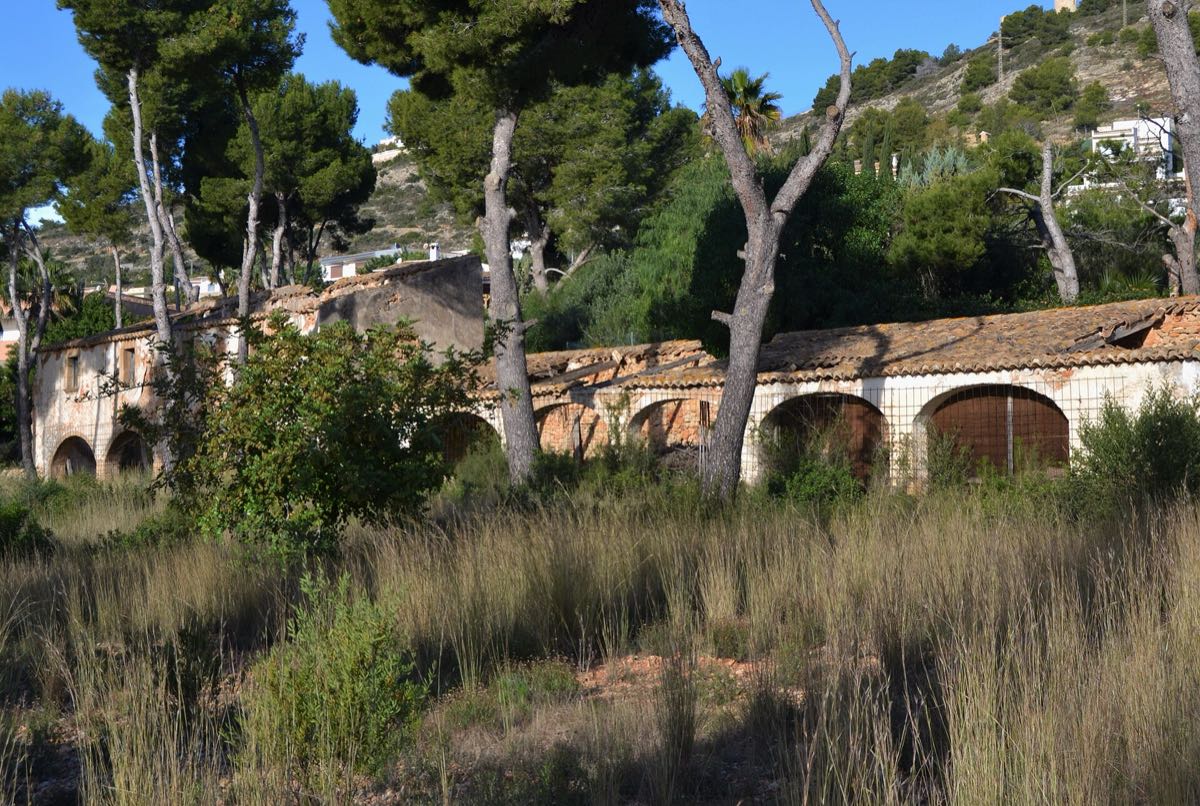
A fortune built on dried grapes
Jávea's most distinctive piece of vernacular architecture exists because of a trade almost nobody here does any more. Through the nineteenth century, the Marina Alta turned muscatel grapes into raisins on an industrial scale and shipped them from this coast to Britain and beyond, and for a few decades that trade made local fortunes, financed the port, and built the handsome bourgeois houses that still line parts of the old town. Its lasting architectural signature is the riu-rau — still one of the more quietly loved features of the whole Marina Alta landscape.
How the raisin trade worked
Muscatel vines grow well on this coast's dry, sun-baked slopes, and drying the grapes into raisins solved the obvious problem of a perishable crop with a long journey ahead of it. Grapes were laid out on cane racks in the open air to dry in the sun and sea breeze, then packed and shipped — much of the crop bound for Britain, where Spanish raisins were a genuine culinary staple through the Victorian era. For a stretch of the nineteenth century, this modest stretch of coast was a serious export economy.
The riu-rau, explained
The trade's one problem was rain — a sudden shower could ruin weeks of drying grapes in minutes — and the riu-rau was the answer. It's an open-sided porch built from a run of rounded stone or brick arches, usually attached to a farmhouse, giving the grapes ventilation on good days and quick shelter under a solid roof the moment the weather turned. The design is simple, elegant, and instantly recognisable once you know to look for it — a line of arches, often golden tosca stone, standing at the edge of a field or beside an old farmhouse.
The boom years
At its peak the raisin trade was serious money for the Marina Alta: it built the handsome townhouses of Jávea's bourgeois families, helped finance the port's development, and turned muscatel raisins into one of this coast's defining exports. The riu-raus multiplied across the countryside during these decades — every farm that could afford one built its own drying porch, and the arches became as much a feature of the landscape as the vines themselves.
Why the trade ended
Like so many nineteenth-century agricultural booms, this one didn't survive contact with the twentieth. Vine blight and mounting competition from other producers undercut the trade around the turn of the century, and the raisin economy that had built so much of the old town's wealth wound down within a generation. Farmers moved on to other crops, and the riu-raus — no longer needed for their original job — were mostly left standing, quietly, across the countryside.
From working porch to prized building
What could have been a story of abandoned agricultural infrastructure became something else instead: the riu-rau's simple, handsome arches turned out to be exactly the kind of vernacular architecture that ages well. Restored examples now serve as private homes, restaurants and cultural venues across the comarca, prized in the local property market for the same arches that once sheltered drying grapes. The name has outlived the trade too — it now attaches itself to festivals, venues and even neighbourhoods that have nothing directly to do with raisins.
Where to see riu-raus around Jávea
They're scattered through the countryside inland from the town rather than concentrated in one spot — keep an eye out on drives or walks through the farmland between Jávea and the surrounding villages, where restored examples sit beside working farmhouses and newer villas alike. The old town itself has architectural echoes of the same era in its bourgeois houses, even without a riu-rau attached.
The riu-rau in Jávea's wider story
The raisin boom sits in the middle of a much longer pattern in Jávea's history: a town that has repeatedly built its fortune on whatever this particular stretch of coast could produce or attract, from Roman fish-salting through raisins to twentieth-century tourism. The riu-rau is simply the most physically visible chapter of that pattern — a building type you can still stand in front of, built by a trade that has otherwise entirely vanished.
How to experience this piece of history as a visitor
A short list for the curious:
- Look for the arches — drives or cycles through the farmland inland from Jávea will turn up restored riu-raus without much effort
- Visit the Soler Blasco museum — the old town's museum covers the raisin trade's place in the town's wider history
- Pair it with a wine-route trip — the Jalón Valley's modern wine industry occupies some of the same agricultural land
- Ask before photographing a private one — many restored riu-raus are now private homes
Riu-raus at a glance
The reliable coordinates:
Hurtige svar
What is a riu-rau, exactly? A riu-rau is the Marina Alta's traditional grape-drying building: an open-sided porch of rounded arches, usually attached to a farmhouse, where muscatel grapes were laid on cane racks to dry into raisins during the region's nineteenth-century export boom. The arches gave ventilation; the roof gave shelter the moment rain threatened the crop.
Can you visit a riu-rau today? Many survive as private homes or working farm buildings, so you're generally viewing them from the road or a footpath rather than stepping inside — this guide doesn't point to specific addresses, since most are private property. Some restored examples do operate as restaurants or venues; if you spot one open to the public, it's usually signposted as such.
Places in this guide

Siesta Advisor
★ 5 (6049 anmeldelser · 2026-06-07)

Kanaloa Aventura
★ 5 (317 anmeldelser · 2026-06-07)

TRX Live Xàbia
★ 5 (100 anmeldelser · 2026-06-07)
Ingen hjemmeside
Espacio van Eijle
★ 5 (81 anmeldelser · 2026-06-07)

Freediving Jávea
★ 5 (63 anmeldelser · 2026-06-07)

Feel Better – Your Personal Gym
★ 5 (57 anmeldelser · 2026-06-07)
Browse all Oplevelser in the directory →
Run one of these businesses? Claim your listing free →