Spain's Digital Nomad Visa: the route from Jávea
A specific, named visa route for remote workers with non-Spanish clients or employers — distinct from the non-lucrative visa retirees use and separate again from simply working remotely under the 90/180-day tourist rule. Here's what it actually requires, how the application runs, and why Jávea works well once you're through it.
What the Digital Nomad Visa actually is
Spain's Digital Nomad Visa (DNV) is a specific, named residency route introduced to let non-EU remote workers live in Spain while working for employers or clients based elsewhere — a genuinely different legal category from simply visiting under the 90/180-day tourist rule while working quietly on a laptop, which carries its own risks the visa is designed to remove. It's also a different route again from the non-lucrative visa many retirees use: that one explicitly forbids working, while the DNV exists precisely to permit it.
Who it's for
The route covers two broad groups: employees working remotely for a company based outside Spain, and self-employed freelancers or contractors whose clients are predominantly non-Spanish. There's typically a limit on how much Spanish-sourced income is permitted alongside the qualifying foreign income, and requirements differ somewhat between the employee and self-employed tracks — a detail worth confirming with an immigration lawyer for your specific working arrangement rather than assuming either track applies automatically.

The income requirement, honestly explained
Applicants need to demonstrate stable, recurring income from qualifying remote work above a set monthly threshold, with the figure reviewed periodically and tied to Spain's minimum wage benchmarks — which means it moves, sometimes more than once in a given year. Rather than quote a number here that risks being stale by the time you read it, the honest instruction is the one this site gives for every changeable legal figure: confirm the current threshold directly with a consulate or immigration lawyer before relying on it.
The Beckham-law tax angle
Some Digital Nomad Visa holders can apply for Spain's special expatriate tax regime — commonly known by the surname of the footballer whose case popularised it — which taxes qualifying income at a flat rate rather than under the standard progressive scale for a set number of years. Eligibility depends on specific conditions being met and isn't automatic just because you hold the visa, so this is squarely a conversation for a Spanish tax adviser or gestoría rather than an assumption to build a budget around. See our tax residency guide for how ordinary Spanish tax residency works if this special regime doesn't apply to your situation.
The application sequence
The broad shape of the process is consistent, even as specific documents and processing times shift.
- Gather proof of remote income, the qualifying employment or client contracts, and private health insurance meeting Spanish requirements
- Apply either at a Spanish consulate in your home country before travelling, or in-country if you're already legally in Spain on another basis
- Attend any required appointment and submit biometric data as instructed
- Await the decision — processing times vary, so build in a margin before any planned move date
- Once approved, complete Spanish registration steps (NIE, foreigner ID card) after arrival
Processing time and where to apply
Applying from within Spain, if you're already there on a valid basis, is often positioned as the faster route and has a statutory maximum decision window, though real-world timing varies by province and caseload. Applying from a home-country consulate before travelling is the more traditional route and can take longer in practice depending on the specific consulate. Neither route is universally faster — check current guidance for your specific consulate or provincial immigration office before building a moving timeline around an assumed date.
Bringing family
The visa generally permits qualifying family members — a spouse or partner and dependent children — to apply alongside the main applicant, subject to their own documentation and, typically, evidence that the household income comfortably covers everyone included. Requirements for dependants are reviewed alongside the main application rather than as an afterthought, so gather family documentation (marriage or partnership proof, birth certificates, translations where needed) from the start rather than scrambling for it later.
Renewal and the path onward
The visa is typically granted for an initial period and then renewable, with continued eligibility depending on maintaining the qualifying remote income and health cover. Time spent on the DNV generally counts toward the residency period needed for longer-term permanent residency, though exact mechanics and any special-tax-regime interactions are worth revisiting with an adviser at renewal rather than assumed to be unchanged from the original grant.
Why Jávea specifically works once you're through it
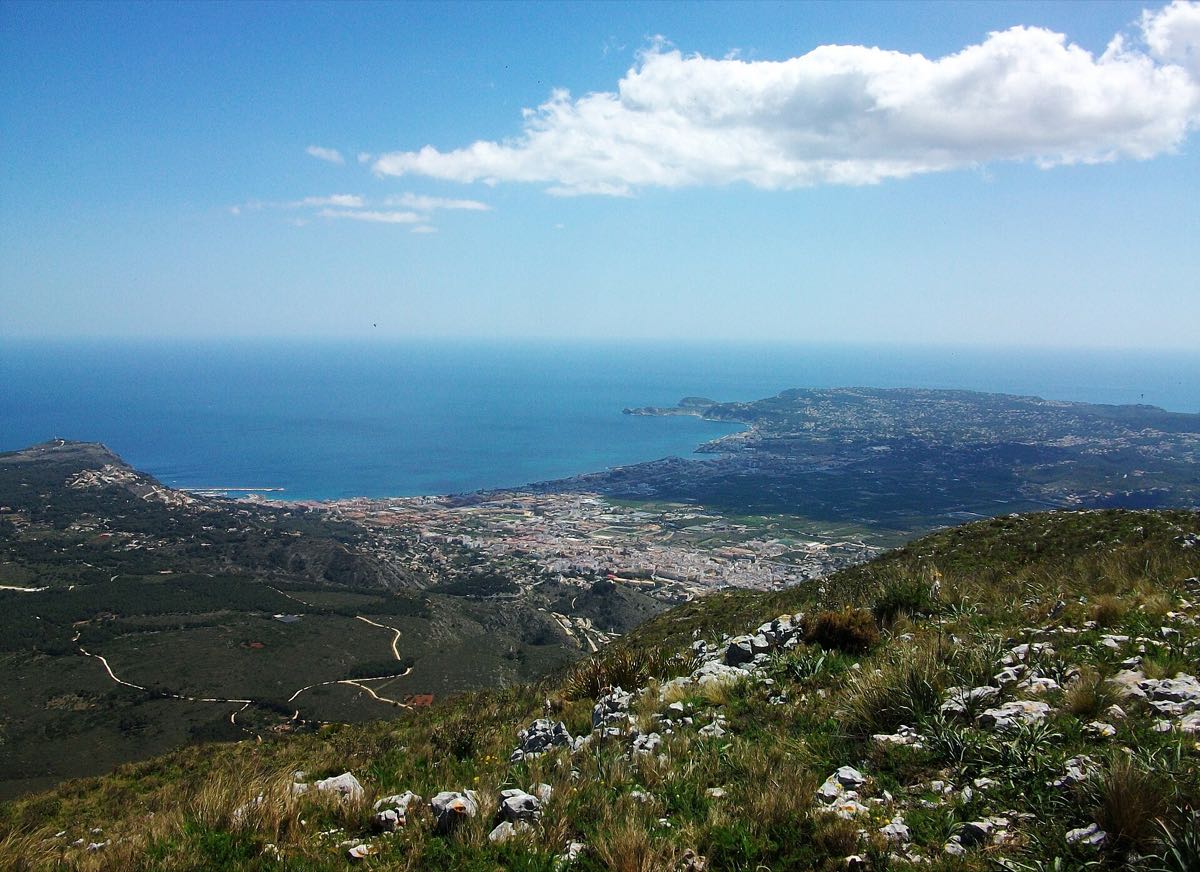
None of the visa mechanics above are Jávea-specific — but once approved, the practical case for basing a remote-work life here is a real one: fibre broadband in town and the port, a CET time zone an hour ahead of the UK and comfortably overlapping most of Western Europe's working day, and an established international community that makes the admin and social sides of settling in noticeably easier than starting cold. Our working-remotely and digital-nomad hub guides cover that everyday picture in full.
Pikavastaukset
Can I bring my family on Spain's digital nomad visa? Generally yes — a spouse or partner and dependent children can typically apply alongside the main applicant, provided their own documentation is in order and the household income comfortably covers everyone included. Requirements for dependants are assessed as part of the same application, so confirm current specifics with an immigration lawyer before assuming any particular family member automatically qualifies.
How is income taxed under the digital nomad visa? It depends on your circumstances. Some visa holders qualify for Spain's special expatriate tax regime, taxing qualifying income at a flat rate for a set number of years rather than the standard progressive scale — but eligibility isn't automatic just from holding the visa. Anyone relying on this needs to confirm eligibility and the current rules with a Spanish tax adviser before assuming it applies to their situation.
Places in this guide

Tomás Ballestero
★ 5 (72 arvostelua · 2026-06-07)

Andrada Ocasión
★ 5 (71 arvostelua · 2026-06-07)

Seguros Ocaso
★ 5 (20 arvostelua · 2026-06-07)

PD ASSESSORS
★ 5 (13 arvostelua · 2026-06-07)
Ei verkkosivua
Allianz Seguros
★ 5 (9 arvostelua · 2026-06-07)
Vera-Cruanyes Asesores
★ 5 (6 arvostelua · 2026-06-07)
Browse all Palvelut in the directory →
Run one of these businesses? Claim your listing free →
You've just read the free guide — this pack is the working version you take with you.