Moving to Jávea with kids: the family relocation guide
Moving a family to Jávea means answering one big question — state school or international school — and several smaller honest ones about teenagers, friendships and how long settling in actually takes. Here is the practical, unromanticised version, from the school gate to the first difficult term.
The decision families actually face
Every family relocation to Jávea eventually comes down to one central choice, made early and lived with for years: state school or international school. Everything else — housing location, budget, daily routine, even which part of town suits you — tends to follow from that decision rather than precede it. It deserves more time than most families give it, and it is worth having the conversation honestly before falling in love with a specific house.
State school: free, immersive, genuinely local
Spanish state schools are free, well-regarded, and put children directly into Spanish and Valencian alongside local kids from day one. For younger children especially, this is the route that produces genuine fluency and genuine local friendships fastest — the sort of integration an international school, by design, cannot fully replicate. The trade-off is real: the first term or two can be genuinely hard for a child with no Spanish, teachers may have limited English, and parents need to be prepared to support homework in a language they may not speak either.
International school: continuity, at a cost
English-medium international schools, generally located a drive rather than a walk from Jávea, offer curriculum continuity — useful for families planning to move again, or with older children mid-exam-cycle — and an immediate, ready-made community of other relocating families. The costs are real and ongoing, not a one-off, and it is fair to say that some families who choose the international route find their children socialise more within the expat bubble than in wider Spanish life, which is worth weighing against the ease it buys.
Language immersion, honestly
Younger children — broadly, primary-age and under — tend to adapt startlingly fast; a year of full immersion is often enough to reach conversational, sometimes near-native, comfort, and their resilience in the early confusing weeks usually outpaces parents' worry about it. Older children and especially teenagers have a genuinely harder time: less neuroplasticity for language, more social stakes riding on fitting in immediately, and, frankly, less patience for starting again. Do not assume a fourteen-year-old will adapt the way an eight-year-old will — plan support, tutoring and realistic expectations accordingly.
Kids' life here, day to day
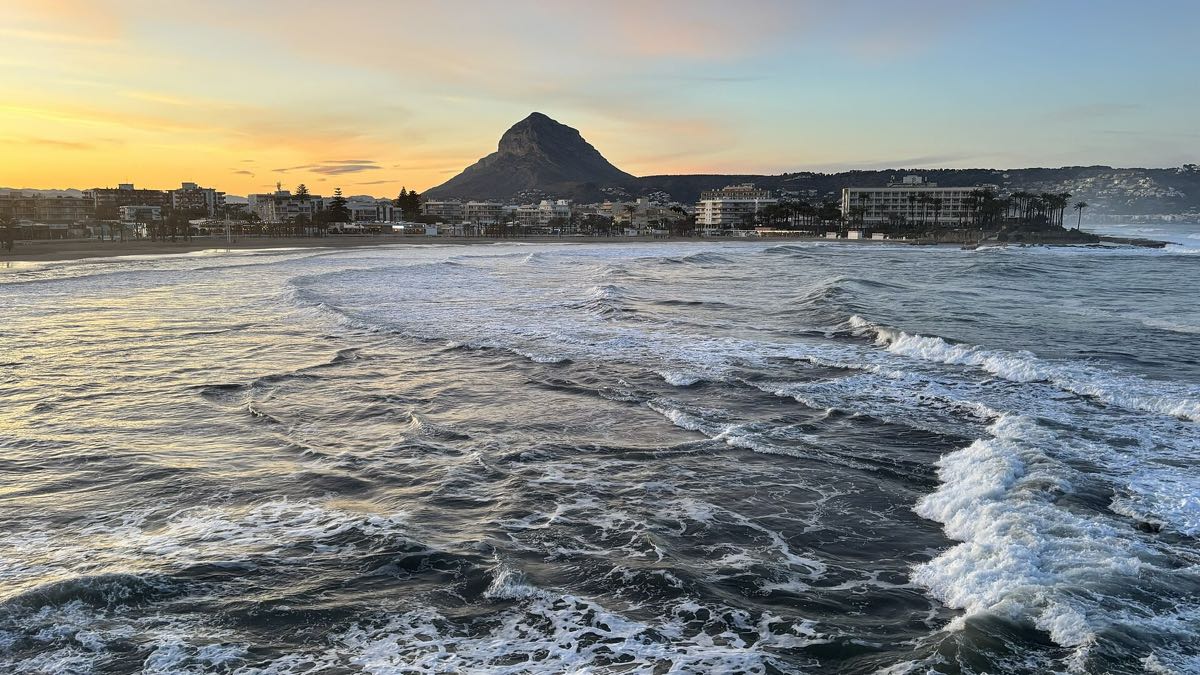
Family life in Jávea leans heavily outdoors and toward the beach: the Arenal is sandy, shallow-shelving and lifeguarded in season, which makes it the honest default for younger children, while older kids graduate to snorkelling in the calmer coves along the coast. Wet-weather options are genuinely limited — this is a beach town, not a city with indoor play centres on every corner — so families used to year-round indoor entertainment options should adjust expectations for the occasional grey week.
- Playa del Arenal — the default family beach, sandy and lifeguarded in season
- Calmer coves further along the coast for older kids and snorkelling
- The Montgó natural park's gentler trails for family walks outside summer heat
- School-holiday clubs and campamentos, run through schools and local sports clubs
Teenagers: the honest chapter
Moving teenagers is the hardest version of this move, and it is worth saying so plainly rather than glossing over it. Nightlife and independent social options are limited compared with a home city, public transport for independent teenage mobility is patchier than in many countries, and parents typically end up driving far more than they expected. Against that: genuine safety, an outdoor-first culture, and — for many teens who stick with it past the first difficult year — friendships and a relationship with the outdoors that a purely urban upbringing rarely offers. It is a real trade, not an automatic win.
The settling curve
Almost every family reports the same rough shape: a hard first two to three months of paperwork, unfamiliar routines and at least one homesick evening per household, followed by a noticeably easier back half of the first school year as routines, friendships and functional Spanish start to click into place. Families who move mid-school-year rather than at the September start often find the adjustment harder, simply because the social groups are already formed — where possible, aim for a September start.
Making friends, for kids and parents alike
School-gate friendships do most of the early work for younger families, forming faster than adult social circles typically do. Sports clubs, informal after-school groups where active, and parent networks around school pickup fill in the rest. For parents, the same clubs and groups that serve the wider expat and local community — walking groups, sports clubs, language exchanges — tend to double as the fastest route to a parent friendship circle, since childcare logistics naturally throw families together.
What the move actually costs a family
Relocating a family costs meaningfully more than relocating a single person or couple, and it is worth budgeting honestly rather than optimistically: removals for a full household, international school fees if that route is chosen, extra insurance, and the inevitable early months of double-running some costs while things settle. Families choosing state school save significantly on fees, which for many is the deciding factor as much as the language-immersion argument — a fact worth admitting plainly rather than dressing up as purely educational philosophy.
Practical logistics: paperwork and housing
Family relocations carry more paperwork than a single move — school enrolment, health centre registration (via the SIP card, once padrón-registered), and often pet transport on top of the standard NIE and residency sequence. Housing choices for families typically prioritise garden or pool safety, proximity to the chosen school, and enough space for visiting grandparents, which usually points toward the family-friendly urbanisations rather than the old town's charming but compact centre. See our schools and healthcare guide, and our NIE, padrón and residency guide, for the full sequence.
Snelle antwoorden
Should I put my child in a state or international school in Jávea? It depends mainly on your child's age and how long you plan to stay. Younger children generally do best in state school, where fast, genuine immersion and local friendships outweigh the short hard adjustment period. Older children, teenagers mid-exam-cycle, or families expecting to relocate again within a few years often do better in an international school for curriculum continuity, accepting the ongoing cost and a more expat-centred social circle in exchange. Visit both types of school before deciding — the right answer is genuinely different family to family.
How long does it take kids to settle after moving to Jávea? Most families see a hard first two to three months, easing significantly by the end of the first school year as language, friendships and routine bed in. Younger children typically settle faster than teenagers, and a September start — aligned with the Spanish school year — settles noticeably faster than a mid-year arrival, because social groups are still forming rather than already fixed.
Places in this guide

Slesta Advisor
★ 5 (6049 beoordelingen · 2026-06-07)

Aventura-T Kayak en Jávea
★ 5 (344 beoordelingen · 2026-06-07)

The Vets Jávea
★ 5 (291 beoordelingen · 2026-06-07)

Atina
★ 5 (183 beoordelingen · 2026-06-07)
Redwood Solar S.L.
★ 5 (110 beoordelingen · 2026-06-07)

Vive Jávea
★ 5 (88 beoordelingen · 2026-06-07)
Browse all Diensten in the directory →
Run one of these businesses? Claim your listing free →