The complete guide to Jávea (Xàbia)
Jávea — Xàbia in Valencian — is a mature, low-rise international town on the Costa Blanca North, built around a horseshoe bay under the protected Montgó mountain and famous for its “three towns”: the historic old town, the working port and the sandy Arenal beach.
The “three towns”
Jávea’s defining quirk is that it isn’t one centre but three. The Old Town (El Pueblo) sits about two kilometres inland at the foot of the Montgó — a beautifully preserved core of tosca-stone streets around the fortress-church of San Bartolomé, the covered Mercat and the Thursday market. The Port (Aduanas del Mar) is the year-round harbour quarter, with the Club Náutico sailing club, a fish market and the keel-roofed Loreto church. The Arenal is the holiday heart: the town’s only large sandy beach, backed by a palm-lined promenade of bars and restaurants. Choosing between them is really a choice of lifestyle — which is why this guide keeps returning to the question of where you would actually stand at ten o’clock on a Tuesday morning.
- El Pueblo — the historic inland core: tosca stone, tapas bars and the Thursday market
- The Port — working harbour, sailing club, seafood and the keel-roofed Loreto church
- The Arenal — the sandy beach, the promenade and the summer bustle
The rule that shaped the skyline
What makes Jávea read as pine-clad hillside rather than a wall of concrete is a long-standing building-height cap. It has kept the tower blocks out, protected the views and the low-rise character, and remains a genuine differentiator against neighbours like Calpe, whose skyline went the other way. The effect compounds quietly: because nothing looms, the Montgó dominates from almost everywhere, gardens keep their sun and streets keep their scale. The town is green, mature and lived-in all year — not a shuttered summer resort — with the best expat infrastructure in the comarca: an international school, an English-speaking professional bench and a full calendar of clubs and fiestas. It is a planning decision you can feel on every walk.
Who lives here
Roughly two in five residents are international, spread across about 85 nationalities. The British community is the largest single group at around 5,000 people, followed by German, Dutch, Belgian and French, with growing Scandinavian and American interest. Many Dutch and German owners hold holiday homes and never register, so the real international weight is higher than the census shows. It is, by a wide margin, the most language-diverse town on this coast — you will hear five languages queuing for bread — yet it never tips into enclave territory: the Spanish town underneath goes about its business, particularly in the old town, and the two layers get along rather well.
The property ladder
Jávea spans the whole ladder. Homes run from around €150k for an Arenal apartment to €2–3.6M for a Montgó or Cap Martí sea-front villa, with a mix-wide median near €595k. Asking prices across the town cleared roughly €4,000/m² in 2026 — up double digits year on year — while conservative mortgage-valuation figures sit lower, near €3,000/m². The two bases measure different things, so read them together rather than picking a favourite. The intra-town spread is about five-fold, from the old-town core to the Granadella frontline: nowhere else on this coast does one postcode cover quite so much financial ground.
Getting here and getting around
No railway serves Jávea, and plenty of locals regard this as a feature. You arrive by car via the AP-7 or N-332 (Ondara or Benissa exits) and the CV-734/CV-736 coast roads — roughly an hour from either Alicante or Valencia airport. The Dénia ferry, about 25 minutes away, links the Balearics; everyday retail is in town, and big-format shopping is at Portal de la Marina in Ondara, about 15 minutes off. Within Jávea itself, the three centres are close but not quite walkable to each other, so most households run a car — how badly you need it day to day depends entirely on which zone you pick.
A year in Jávea
The town runs on a proper seasonal rhythm. Spring is the local secret — warm enough for lunch outside, cool enough to climb the Montgó. June brings the Sant Joan bonfires, July the Moors and Christians, and the port honours the Virgen de Loreto as summer winds down; between them, August delivers the full holiday crescendo on the Arenal. Then September exhales, the sea stays warm for weeks, and Jávea returns to itself. Winters are short, bright and sociable rather than bleak — the promenade fills with coffee drinkers in sunglasses, and the clubs, choirs and walking groups that anchor expat life barely pause.
Eating well
Jávea eats in three distinct centres, which is unreasonable good fortune for one town. The old town does tapas in shaded plazas and serious produce from the covered Mercat Municipal; the port does seafood, with the day-boat catch landed a few metres from the table; the Arenal paseo does everything from beach bars to polished dining with the sand in view. The Thursday street market fills the old-town lanes with fruit, flowers and the usual cheerful clutter. You could eat out for a month here without repeating yourself — plenty of residents appear to be conducting exactly that experiment. The directory picks below are the town’s current top-rated tables.
Beaches and the wild coast
The Arenal is the town’s only large sandy beach — hence its gravitational pull — but the coastline it anchors is remarkably varied. The pebble La Grava sits by the harbour; south of the Arenal the shore breaks into rocky coves and viewpoints along the road to Cabo la Nao, including the celebrated Granadella, regularly ranked among Spain’s best coves. Behind the town, the Montgó Natural Park (753 m) offers proper hiking with the sea on both horizons. The mix — one family-sandy beach, a dozen wilder alternatives, a mountain out the back — is much of what people are buying when they buy here.
Schools, healthcare and the practical bench
Jávea has the deepest practical infrastructure in the Marina Alta: an international school on the doorstep, Spanish state schools through the town, a public health centre, and the comarca’s hospital a short drive away in Dénia. Just as valuable is the professional bench — lawyers, gestors, architects and clinicians who work comfortably in English and several other languages, honed by decades of international residents. Spanish bureaucracy rewards patience and good help; here, the good help is easy to find, and most of it is used to explaining things twice.
Choosing your corner
The zone decision matters more in Jávea than in most towns, because the spread is so wide: walkability runs from about 90/100 on the Arenal to 20/100 on the Montgó hillsides, sea-view likelihood from 15% in the old town to 90% at Balcón al Mar, and prices across that five-fold range. The honest method is to match the zone to your tolerance for car dependence first and your budget second — a view you must drive twenty minutes to leave is a different product from a promenade at the bottom of the stairs. The zone guides linked below take each corner in turn.
Jávea is not one town with three names; it is three small towns that agreed to share a mountain.
The Coastal Record
Hurtige svar
Do I need a car in Jávea? In the Arenal, the port and the old town, daily life works on foot and a car is a convenience. On the villa hillsides — Montgó, Balcón al Mar and their neighbours — a car is essential, full stop. Most households keep one regardless, because the coves, the Thursday market and the airports all reward wheels.
Is Jávea lively in winter? Quieter, but genuinely alive — that is rather the point of it. Around 30,000 people live here year-round, the old town and port keep their everyday rhythm, and the club-and-fiesta calendar barely pauses. The Arenal is the most seasonal of the three centres; the other two hardly notice January.
Which airport should I use for Jávea? Either works. Alicante is usually a shade closer at about 1h05–1h15 by car, with the bigger route network; Valencia runs about 1h20–1h35 and is often calmer in high season. Compare fares to both — the difference in drive time rarely decides it.
Places in this guide
Catering4u
★ 5 (27 anmeldelser · 2026-06-07)
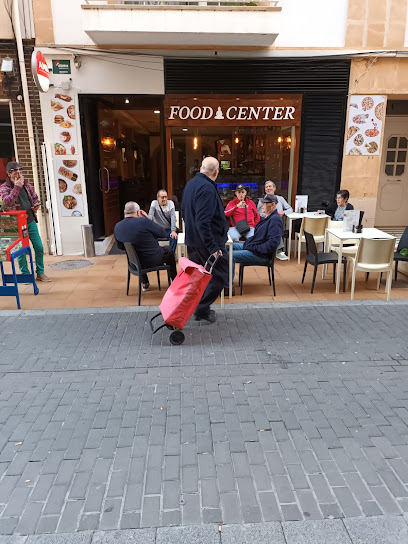
Restaurante Food Center
★ 5 (22 anmeldelser · 2026-06-07)
Ingen hjemmeside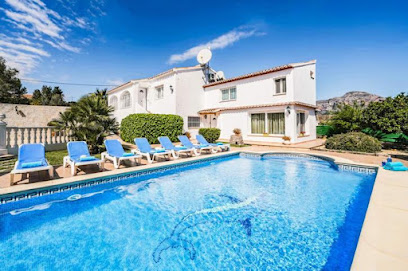
Villa Celeste
★ 5 (20 anmeldelser · 2026-06-07)

La Casita de Paco
★ 5 (10 anmeldelser · 2026-06-07)
La Casa della Pasta
★ 5 (5 anmeldelser · 2026-06-07)
El Mirador
★ 5 (4 anmeldelser · 2026-06-07)
Ingen hjemmeside