La Cala: the exclusive cove-zone
La Cala is Jávea's exclusive-but-accessible cove zone — single-level contemporary villas in Ibizan and Indonesian-inspired styles on generous green plots, prized for privacy, peace and Mediterranean light. It suits buyers who want modern architecture and low-density calm, whether they buy built or build their own.
The character
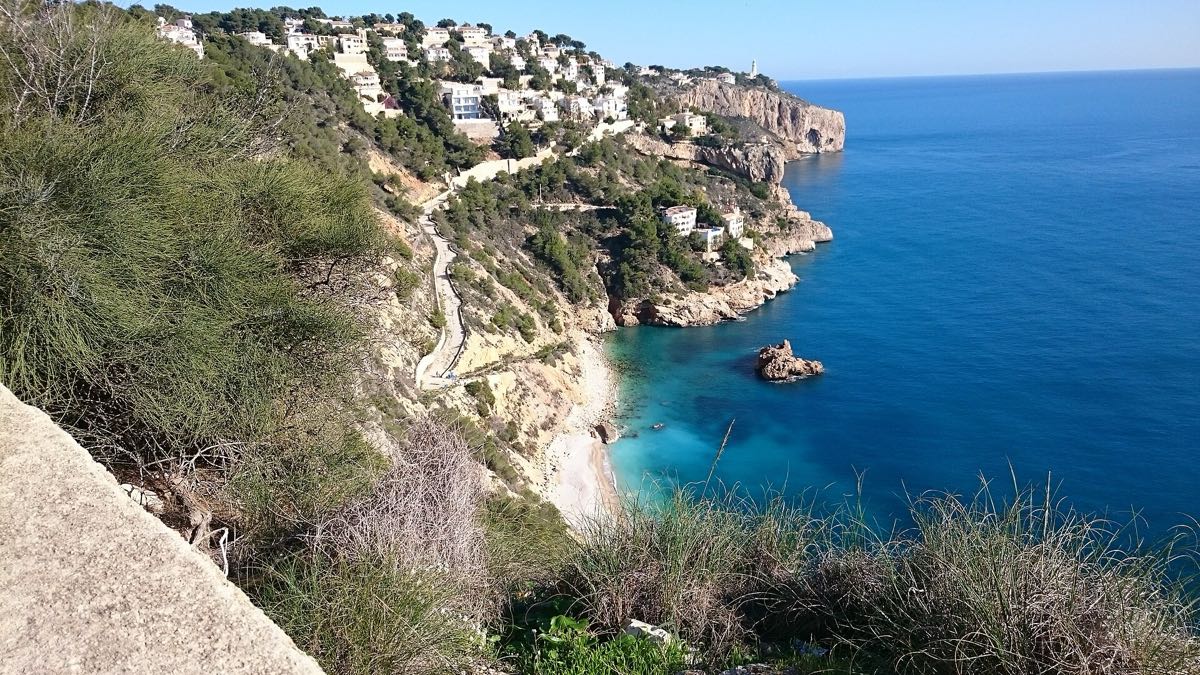
La Cala is the cove zone that manages to be exclusive without being remote — a green, low-density pocket of single-level contemporary villas set back from the coast between the town and the Cap Martí headland country. The style is unmistakable once you have seen it: white Ibizan geometry, flat roofs, clean modern lines and the occasional Indonesian-inspired house the local trade has nicknamed "Baby Bali". Plots run generous — around a thousand square metres is typical — and the setting is deliberately quiet, far from the tourist bustle, prized for peace, privacy and the particular quality of the light. It is where Jávea's modern-architecture buyers end up, usually on purpose.
The architecture of light
Most of Jávea's villa country was built in waves of naya-and-tosca tradition; La Cala reads differently. The dominant grammar here is contemporary — white render, glass walls, covered terraces that dissolve the boundary between inside and garden — with the Ibizan and "Baby Bali" strains adding texture: rendered curves, timber, water features, a certain resort-like calm. What unites the styles is an obsession with light. Houses are oriented, glazed and shaded to harvest the Mediterranean day from first coffee to last glass, and the single-level format means every room participates. Buyers who tour the classic hillsides first often describe arriving in La Cala as changing decades.
The single-level advantage
The one-floor villa is La Cala's signature, and its appeal is more than aesthetic. A single level means no stairs to negotiate now or resent in twenty years, which makes these houses quietly popular with buyers planning a long Spanish future. It means the garden, pool and terraces connect to every room rather than to half the house. And it means cleaner architecture: long horizontal lines that sit low in the green plots instead of competing with them. The trade-off is that a single storey on a flatter plot wins fewer panoramic sea views than a hillside tower — roughly half the zone's homes catch the sea, respectable but not the point here.
Plots and the build route
Unusually for a coastal zone this settled, La Cala still offers a genuine build-your-own route: a live release of building plots means buyers can acquire land and commission exactly the contemporary house the neighbourhood specialises in. The generous plot sizes give architects room to work — pool, garden, guest wing and still space to breathe — and the surrounding stock sets a high, coherent design standard to build against. For buyers who have toured Jávea's resale market and found every house eighty per cent right, the plot route is the way to close the gap, provided they have the patience a build demands.
Homes and the market position
La Cala occupies an interesting rung on Jávea's ladder: it bridges the value plot-and-build market on one side and the premium sea-view fringe that blends into Cap Martí and Portichol on the other. The mix indicator sits just under the town's prime-coast levels, which buys you more architecture and more plot than the front-line zones offer at the same money — the discount being distance from the water rather than any deficit of quality. Around 55% of homes catch a sea view, rising as the zone climbs toward the headland side. Directionally: strong value for modern space, with the premium reserved for the sea-view upper fringe.
The cove and the coast
The zone's name promises water, and the water is there — the nearest beach access sits around two kilometres away, with the celebrated cove coast of Cap Martí, Portichol and the Granadella side unfolding within an easy drive. This is the honest framing: La Cala is cove-adjacent rather than cove-front. You will drive five minutes to swim, not stroll. In exchange, the homes sit in green calm rather than on a summer thoroughfare, and residents treat the whole southern cove collection — rather than one crowded stretch — as their local coast. Most keep a mental rota: which cove for the morning swim, which for guests, which for escaping August.
Peace, privacy and the low pulse
What residents praise first is not the architecture but the quiet. La Cala is genuinely low-density — houses screened by pines and gardens, lanes that carry local traffic only, no commercial strip, no through-route to anywhere busier. The zone markets itself as far from the tourist bustle and, unusually for such claims, delivers: even in August the streets stay residential while the coast roads fill. For buyers coming from cities, or from Jávea's livelier quarters, the first night's silence is the moment the decision tends to happen.
Some zones sell you a view of the Mediterranean. La Cala sells you the light and the silence it comes wrapped in — and lets you drive to the water like a local.
The Coastal Record
The daily logistics
Run the numbers before you fall for the architecture. The old town and the port each sit about six kilometres away, the nearest supermarket around three, the international school roughly eight, and the hospital a longer regional drive. Walkability is 22/100 — this is car country, plainly, and households run two cars more often than one. The compensating fact is that nothing is actually far: every errand resolves inside a quarter of an hour, and the lanes are quiet enough that driving here never acquires the grind it has elsewhere. But buyers imagining a stroll to morning coffee should be told kindly: not this zone.
Who it suits — and the hillside question
La Cala suits buyers who want modern, single-level architecture in genuine quiet: design-led couples, retirees planning for their knees with unusual foresight, remote workers who need light and calm, and builders who want a plot with standards around it. The classic comparison is with the traditional hillsides — Montgó's slopes and the settled suburbs — and it sorts cleanly. The hillsides offer altitude, panorama and mature gardens in older stock; La Cala offers flatter plots, newer architecture and easier daily living, with the sea view optional rather than guaranteed. Buyers who prize the house win here; buyers who prize the window win up the hill.
Buying here
Diligence in La Cala divides by route. For finished villas: build quality and age — contemporary style spans everything from 1990s modern to last year's release, and they live very differently — plus orientation, glazing and how the pool terrace actually catches the afternoon. For plots: boundaries, buildable percentages, services to the boundary and a realistic build timeline, all standard checks your lawyer and architect will run. The zone's coherence protects value: a well-built modern house here sits among its own kind rather than as an outlier. Directionally, the premium tracks the view — the fringe that climbs toward Cap Martí carries the zone's top prices.
Kurze Antworten
Why are single-level villas so popular in La Cala? They suit the plots, the climate and the buyers. One floor gives every room direct garden and terrace access, harvests the Mediterranean light, and removes stairs from the long-term equation — a quiet priority for buyers planning decades in Spain. The flat, generous plots make the format natural rather than forced.
How far is La Cala from a beach? The nearest beach access is around two kilometres, with the celebrated southern coves — the Cap Martí and Portichol coast and beyond — an easy drive. It is cove-adjacent living rather than front-line: you drive a few minutes to swim, and in exchange the house sits in green, low-density quiet.
Should I buy a finished villa or build on a plot in La Cala? Both routes genuinely exist here, which is rare so close to the coast. Buy finished if you want certainty and speed; build if the resale market keeps offering you eighty-per-cent-right houses. Cost the build honestly — fees, timeline, patience — and compare per-square-metre against finished stock before deciding.
Businesses & distances in La Cala →
Places in this guide

Slesta Advisor
★ 5 (6049 Bewertungen · 2026-06-07)

Aventura-T Kayak en Jávea
★ 5 (344 Bewertungen · 2026-06-07)

The Vets Jávea
★ 5 (291 Bewertungen · 2026-06-07)

Atina
★ 5 (183 Bewertungen · 2026-06-07)
Redwood Solar S.L.
★ 5 (110 Bewertungen · 2026-06-07)

Vive Jávea
★ 5 (88 Bewertungen · 2026-06-07)