The Montgó — a biography of Jávea's mountain
Every photograph of Jávea has the same thing in the background: a 753-metre limestone massif that fills the northern sky, cannot be built on, and quietly runs the town — its weather, its walks, its property prices, even its sunsets. Locals see an elephant's head in the profile. This is the mountain's story, from the summit trail to the villa lanes at its feet.
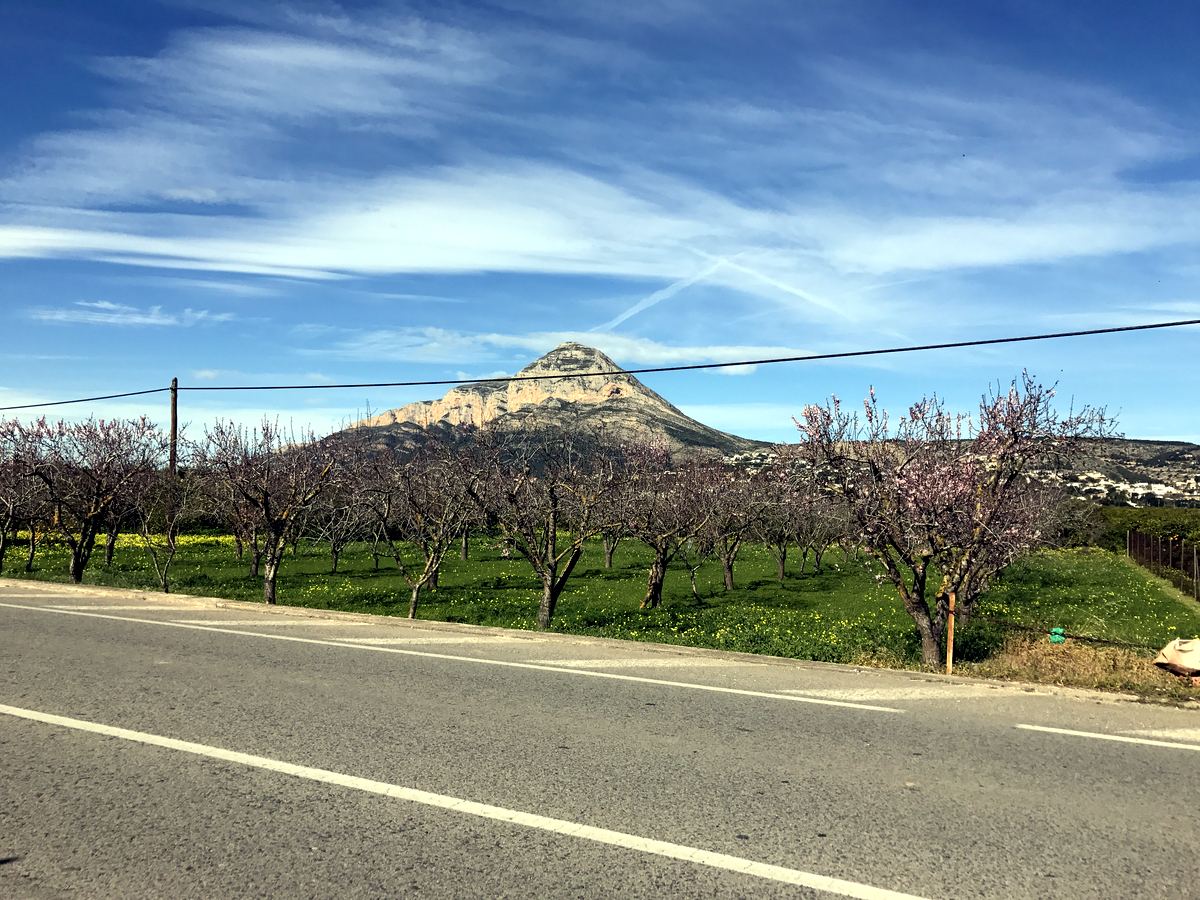
The presence
Not scenery. The landlord.
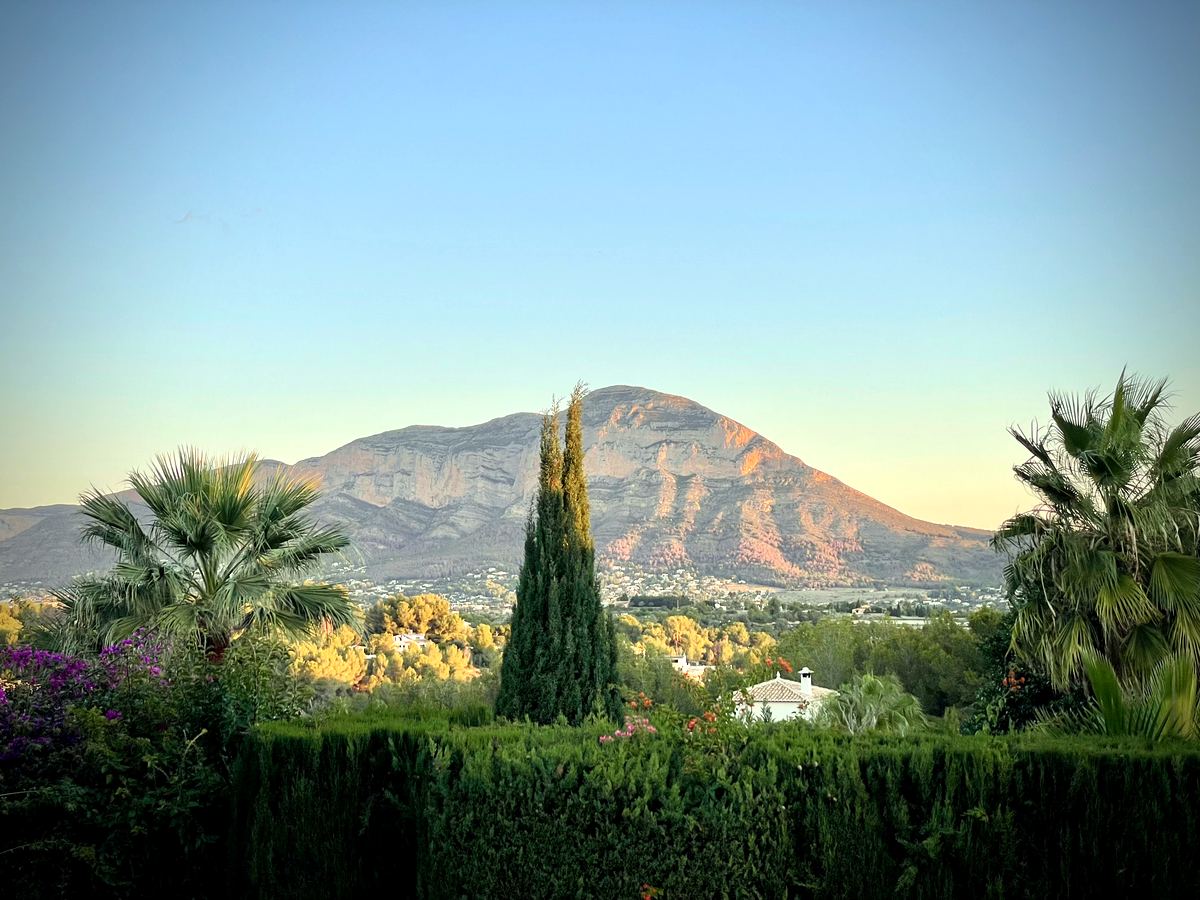
Start anywhere in Jávea — the beach, the old town, a café terrace — and look north. The Montgó is already there, and it was there first. A 753-metre limestone massif, the great whale-back that separates Jávea from Dénia, protected as a natural park so its slopes will stay wild for good. Locals have long seen an elephant's head in the profile, and once you have seen it too you cannot unsee it. The town's own guide puts it best: the Montgó is not scenery, it is the landlord — presiding over every street, every plot, every photograph, permanently. What follows is the tenant's account of living under it: the climbs, the birds, the weather it makes, and the price of an address at its feet.
Up close
A serious mountain in miniature
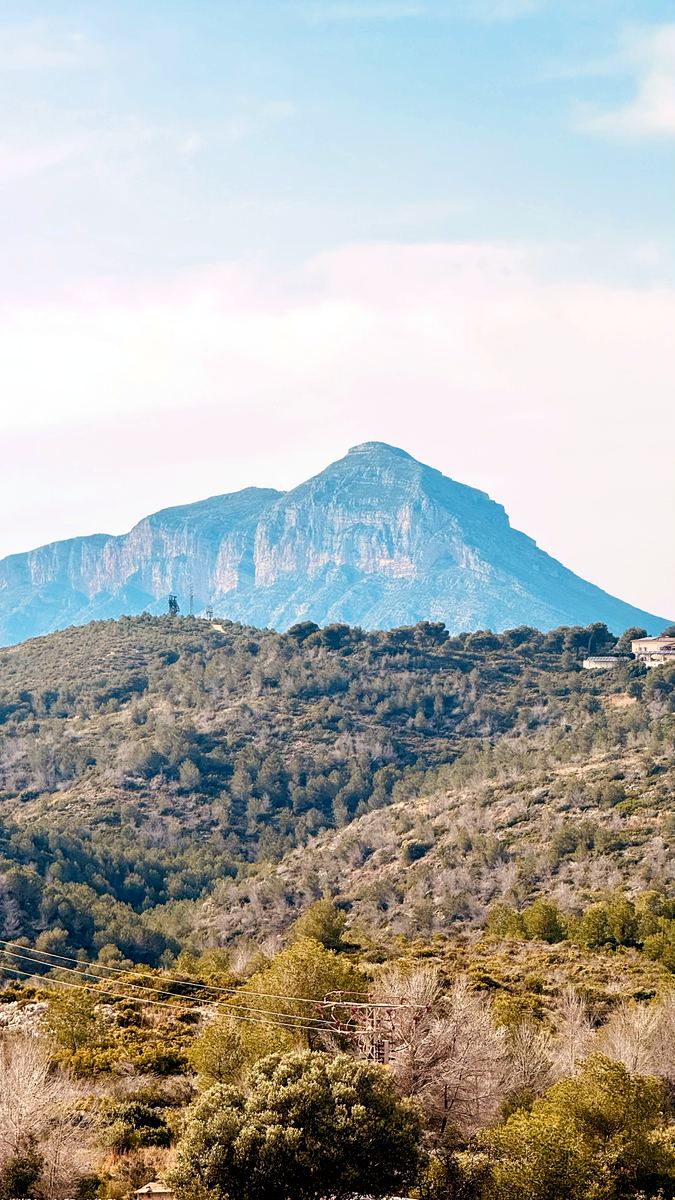
From the beach, the Montgó is a benign silhouette — a green backdrop doing quiet compositional work behind the bay. Up close it is a different creature entirely: a serious mountain in miniature, with sharp karst limestone that punishes flimsy shoes, aromatic scrub of rosemary and pine, and cliff faces that mean business. This is the mountain's great trick — it is two mountains at once. The natural park carries a network of marked routes at every grade, so it earns a place in your week whatever your fitness: the summit for a big morning, the lower paths for an easy leg-stretch, the ridge for everything in between. Walkers in Jávea do not drive to the mountains at weekends. They live under one, and the trailheads start minutes from town.
The rite of passage
The summit trail
The classic outing is the summit trail to the 753-metre top — Jávea's rite of passage for walkers. It is a proper undertaking rather than a stroll: limestone sharp enough to punish casual footwear, little shade once you are up high, and a final approach that asks for sure feet. The reward is the definitive view of the region — both bays, the inland sierras, and on the clearest days a horizon that seems to include half the Mediterranean. The rules are old and simple: start early, carry more water than feels reasonable, and give this mountain the respect you would give one twice its height. Done properly, it is one of the great half-days on the Costa Blanca — and a reasonably fit beginner can manage it, slowly, at dawn, outside high summer.
The gentler mountain
The cave of the water
Not every Montgó day needs the summit, and the mountain is generous to those who ask less of it. The walk to the Cova de l'Aigua — the cave of the water, set into the mountain's flank — is the classic gentler alternative: a shorter climb to a genuinely atmospheric destination, with broad views over Jávea's bay opening from the path as you go. The ridge and lower circuits offer something easier still, winding through scented scrub where the rosemary and pine make walking here smell as good as it looks. These are the routes for visitors testing their legs, for families with school-age children, and for the residents who have worked out the mountain's best use of all: not as an event, but as a habit. The Montgó gives you back exactly as much as you ask of it.
The viewpoint
The windmills on the ridge
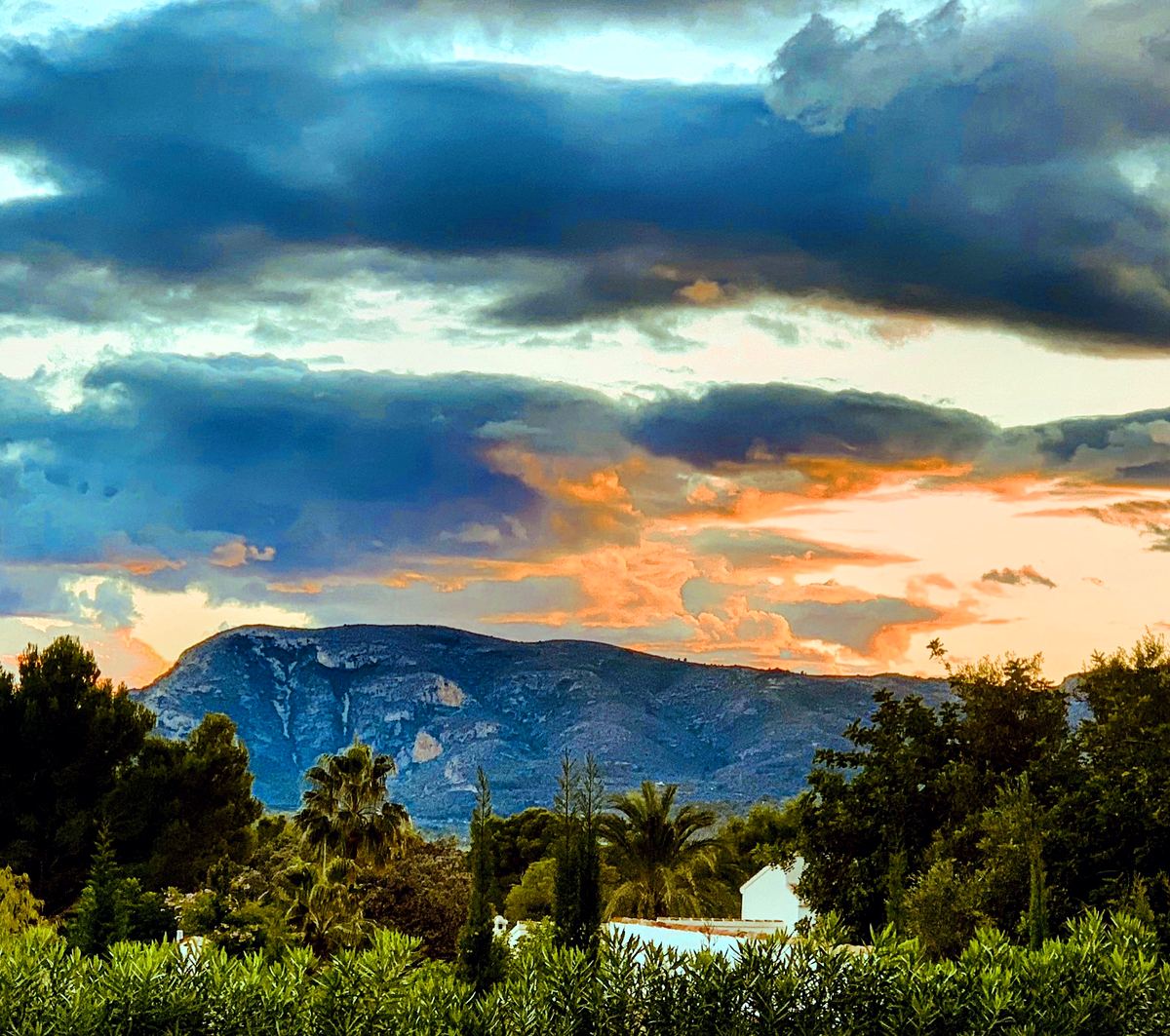
On the ridge between Jávea and Dénia stand the restored Molins del Montgó — a line of old stone windmills, centuries-weathered, that mark the area's most generous viewpoint: an easy walk to a panorama that takes in both bays at once. This is the outing to give someone who claims not to like walking. The mills make a fine foreground for photographs, and in the last hour of the day the light turns the whole ridge gold — which is why this has become the local sunset spot. Arrive as the day cools, watch the lights come on in two towns at once, then walk down in the dusk feeling thoroughly smug. Unlike the summit, none of it demands technical footwear or a full-day commitment; it fits comfortably into an evening.
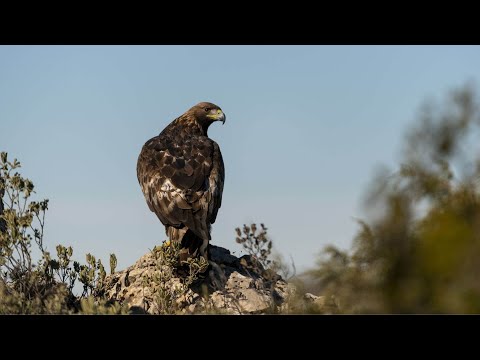 Practica birding en el Montgó — Mediterráneo en Acción (Comunitat Valenciana tourism)
The wildlife
A habitat with references
The park's protection is not only about the view — it protects a working habitat: aromatic scrub, karst limestone and cliff faces that support real bird life. The headline draw is birds of prey riding the thermals off the massif, while the lower scrub holds the smaller, quieter residents that reward patience more than distance covered. Down where the mountain runs into the sea, the exposed cliffs at Cap de Sant Antoni and Cap de la Nao suit cliff-nesting seabirds instead, and the spring and autumn migration windows layer passing species over the resident cast. Nor is this a stretched claim: the regional tourism board has used the Montgó as the backdrop for its own birdwatching promotion — the film here is theirs. Binoculars, quiet feet and an early start count for more than any other kit.
The microclimate
The mountain that minds the thermostat
Every coastal town claims a microclimate; Jávea's claim has a mountain to back it up. The Montgó — 753 metres of limestone parked directly north-west of the bay — shelters the valley from cold continental winds in winter, while the horseshoe of capes moderates the sea's moods. The result is a narrow, well-behaved temperature band: winters milder than the geography suggests, summers tempered by sea breezes. You will often hear that the World Health Organization rated this among the healthiest climates on earth. Honesty compels us to say the citation is elusive — treat it as folklore with a suspiciously large grain of truth — but the underlying pattern of mild, dry, sunny stability is real, measurable, and largely the mountain's doing. The landlord, it turns out, also pays the heating bill.
The address
What the backdrop is worth
The slopes below the park are one of Jávea's classic villa addresses: leafy, exclusive hillside country of large plots, pine and holm-oak, and panoramic sea-and-mountain outlooks, where the loudest thing most evenings is somebody's pool pump. The economics are the mountain's doing too. Because the massif behind can never be built on, the backdrop is legally permanent — a scarcity that quietly underpins values. View villas run about €700k to €2M+, and two villas a lane apart can be separated by hundreds of thousands of euros on the strength of what fills the terrace windows. The honest catch is mobility: walkability scores about 20/100, every loaf of bread is a drive, and town is a ten-minute run down the hill. The trade has been the same for decades — distance, exchanged for quiet and a horizon.
Plan it
How to meet the mountain
The honest calendar: autumn to spring is prime time. From October to May the temperatures are made for walking — crisp mornings on the Montgó, and the kind of winter clarity that serves up hundred-kilometre views. In high summer the rule is early or late: locals simply invert their day, walking at seven and swimming at noon, and save the exposed upper mountain for another month entirely. First-timers should build up — the Cova de l'Aigua and the windmills give you the mountain's character and much of its views for a fraction of the summit's effort. Proper shoes against the sharp limestone, more water than feels reasonable, tell someone your route, carry a charged phone. Standard mountain manners, even on a small mountain. Especially on one this good at looking harmless from the beach.
💬 Share this story on WhatsApp
Sources
- Jávea.guide — Hiking the Montgó & the Granadella trails
- Jávea.guide — Birdwatching in Jávea: Montgó and the capes
- Jávea.guide — Montgó: the villa hillsides
- Jávea.guide — Jávea's climate and weather (the Montgó microclimate)
- Video: Practica birding en el Montgó — Mediterráneo en Acción, Comunitat Valenciana tourism (YouTube, as embedded in the birdwatching guide)
Facts checked Jul 2026. Every dated claim above traces to these — where a programme isn't published yet we say so rather than guess.
Read the full guide: Hiking the Montgó & the Granadella trails →