Granadella — anatomy of Spain's best beach
Twice voted the best beach in Spain, Cala Granadella is a horseshoe of white pebble with no sand, a small car park that closes the road behind it, and a forest that burned and grew back. None of those sound like compliments. All of them are exactly why it wins. This is how the cove works — above the water, under it, and up the headland where a watchtower kept lookout for pirates.
The arrival
A road that builds the reveal
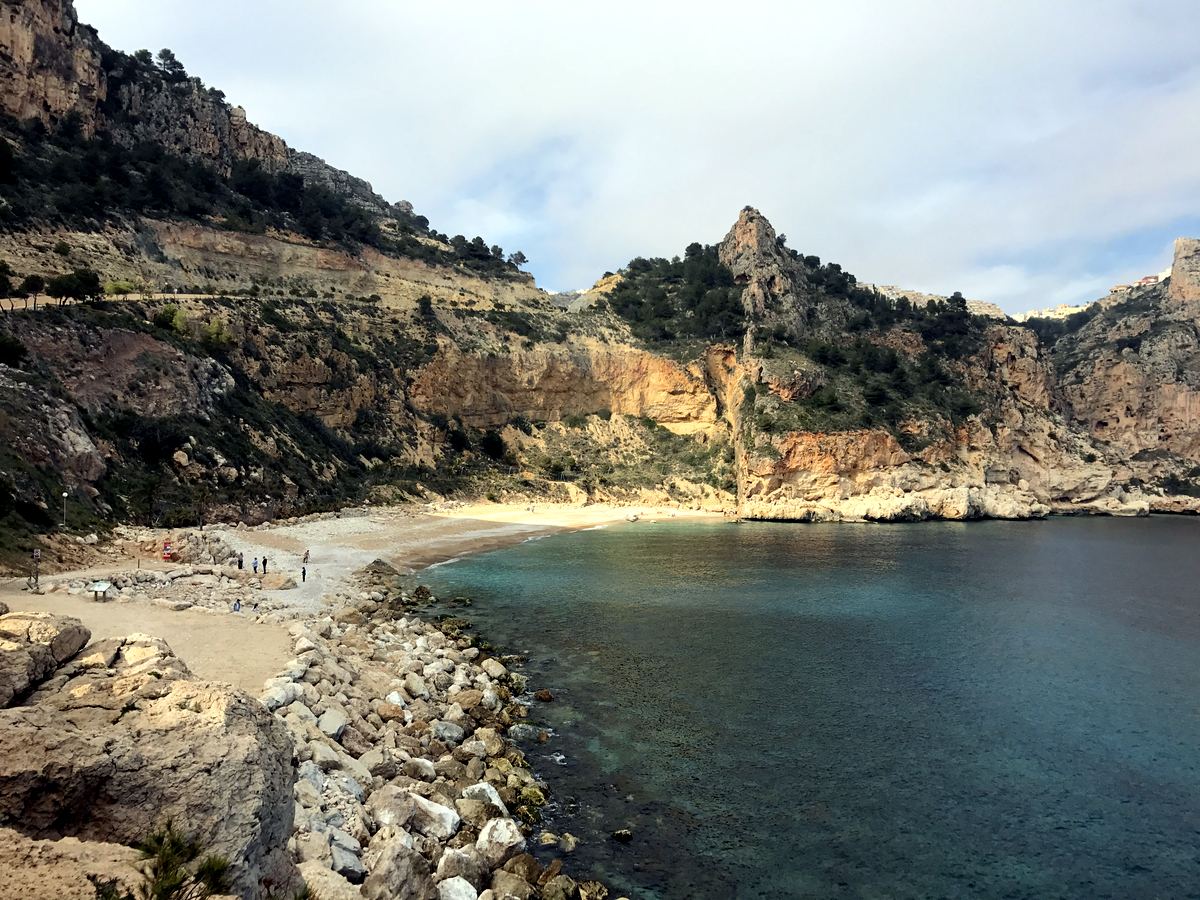
Half the pleasure of Granadella is the approach. The road leaves the plateau above Jávea and drops through the forest park in a series of hairpins, pine trunks strobing past the windows, blue flashing between them. Then the final bend, and the cove opens out below: a horseshoe of white pebble cupped between pine-dark headlands, the water shading from glass to turquoise to deep sapphire. Some accolades are marketing. This one held up — a small, wild-edged cove with no sand that keeps winning national beauty contests, twice voted the best beach in Spain.
The trick
No sand. That's the secret.
Granadella is a pebble beach, and this is a feature, not a flaw. No sand means no suspended sediment, and no sediment means water of a clarity that borders on the theatrical — you can watch fish patrol the shallows from dry land. The pebbles are smooth, pale and warm underfoot; bathing shoes turn a hobbled entry into a dignified one. The cove faces east-southeast, catching the morning sun full on the water, which is when the colours do their best work. Every postcard-perfect photograph of Granadella is really a photograph of what isn't in the water.
Below the waterline
The reserve next door pays the bills
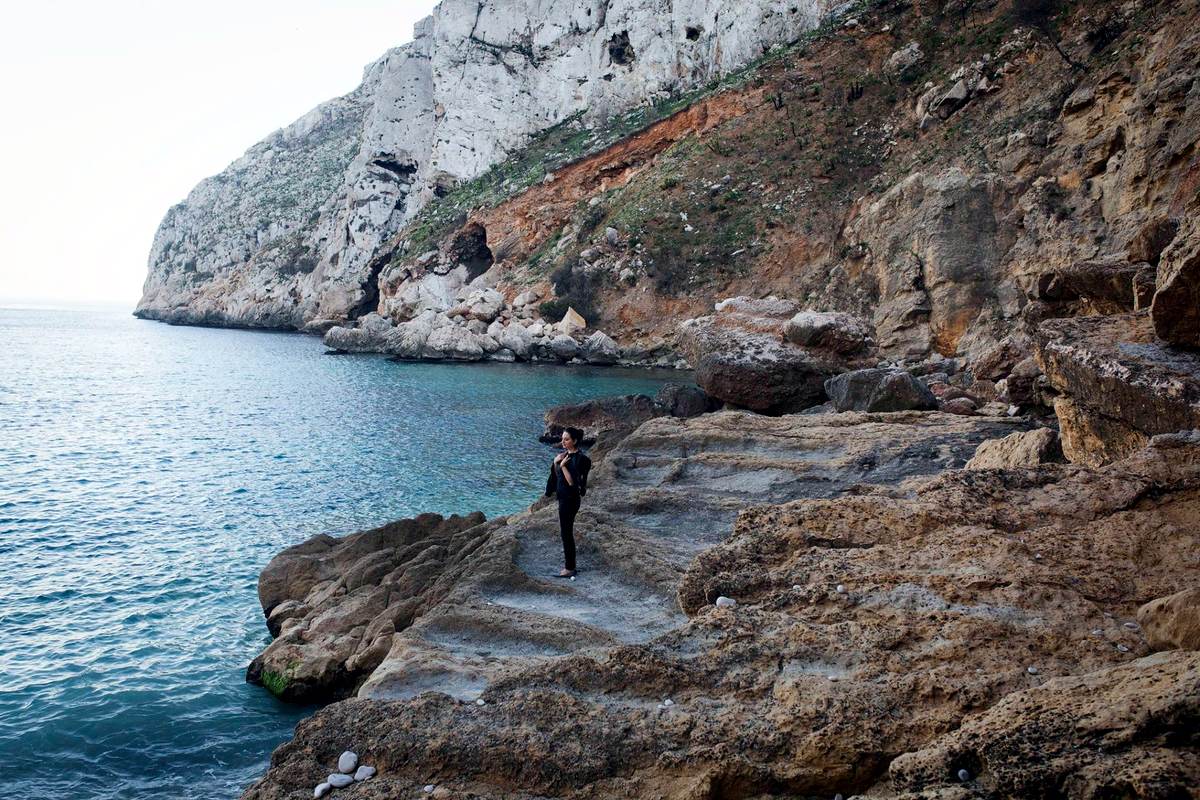
Underwater, Granadella earns the reputation all over again. Both arms of the cove run out as rocky reef — the southern side is the classic line, boulders and gullies stepping down into deep blue with fish traffic constant along the wall. The abundance isn't luck: at the far end of the bay, the waters off Cap de Sant Antoni have been a marine reserve since 1993, and three decades of restricted fishing spills bigger, bolder fish along the whole coast. Groupers, barracuda, seriously grown-up bream — species a snorkeller rarely meets on unprotected coasts are regular company here.
The quiet engine
The dark patches are a city
The dark patches you'll see from the cliffs are not rocks or shadows — they're Posidonia oceanica, a seagrass found only in the Mediterranean, growing in meadows that can be thousands of years old. Posidonia is why the water is this clear: it traps sediment, produces oxygen and shelters the juvenile fish that later populate the whole coast. Swim slowly over a meadow and it resolves into a city — wrasse patrolling lanes, bream hanging in the current, the occasional flash of something quicker. Treat it gently; a metre of meadow takes decades to grow.
The scar
September 2016: the forest burns
The pines that frame every photograph of Granadella carry a scar and a lesson. In September 2016, a wildfire swept through the pinewoods above the cove, burning a painful swathe of the forest park. Nearly a decade on, the recovery is well underway — regrowth has greened the slopes, the trails have long since reopened, and young pine is filling in around the survivors. Walk the forest paths today and you can read the story in the vegetation: what burned, what endured, and how quickly this landscape heals when given the chance.
Up the headland
A watchtower against pirates
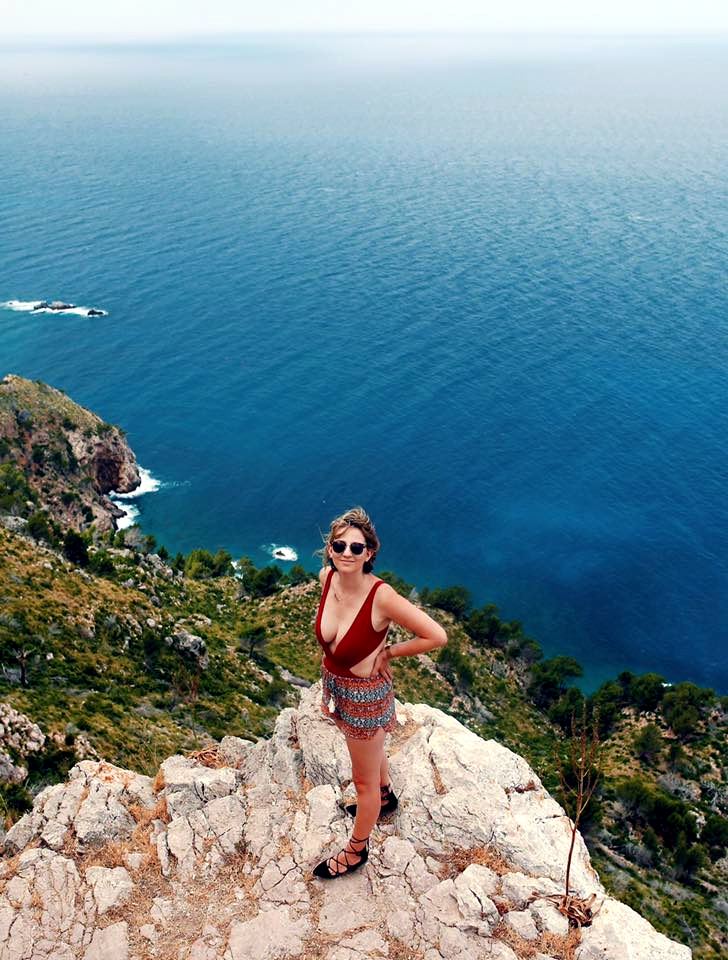
Climb the coastal footpath out of the cove — a moderate walk, uneven and rocky underfoot, the sea visible through the trees most of the way — and you reach the old fortín. Like the other watchtowers strung along this coast, it belongs to an era when Barbary corsair raids were a real and recurring threat, and lookout points like this gave coastal communities early warning to take shelter. What remains today is weathered and partial rather than a restored monument: a ruin worth reaching for the setting and the history, reduced by time and salt air to its bones.
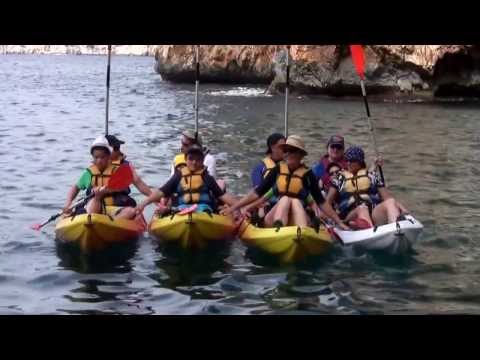 Kayak: la Granadella a la Cova del Llop Marí (Xàbia Turisme)
The loophole
The sea door never closes
There is a second way into Granadella, and it involves no hairpins and no car-park arithmetic: arrive on the water. Boat trips and charters work this stretch of coast all season, and the approach from the sea is the cove's best angle — pines resolving out of the cliff line, the water paling from deep blue to turquoise as the bottom rises to meet you. Kayakers paddle down past sea caves that road-bound visitors never see and slide onto the pebbles like minor conquistadors. When the road gate swings shut behind the morning's lucky few, the sea remains cheerfully open to anyone with a hull or a paddle.
An honest word
In August, the cove defends itself
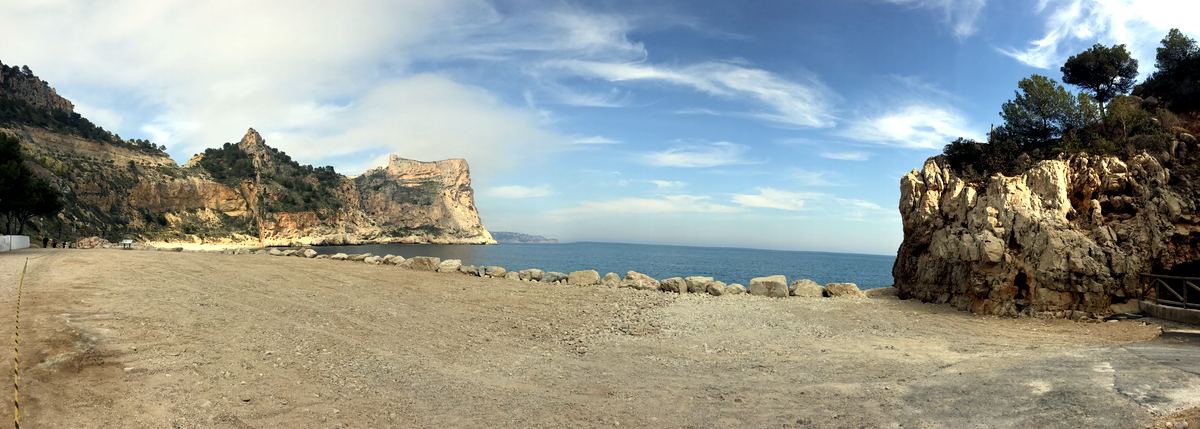
Here is the truth about Granadella in July and August: the cove is deliberately protected from its own popularity. The car park at the bottom is small, and once it fills — which happens startlingly early — the access road is closed to further traffic. This is a good thing; it keeps the cove from becoming the very crush people came to escape. But it means summer visits demand strategy: arrive early in the morning, come late in the afternoon as the first shift leaves, or take the sea door and skip the question entirely. The cove doesn't do queues. It does gates.
The reward
October to May, it empties
From October to May, Granadella performs its best trick: it empties. The water holds its warmth well into autumn, the light goes low and golden, and you can have Spain's best beach nearly to yourself on a bright winter weekday — a handful of swimmers, a fisherman on the rocks, the pines doing their quiet work on the headlands. If you have any flexibility in when you visit Jávea, this is the argument for the shoulder seasons compressed into a single cove. The beach kitchens keep shorter hours outside summer, so pack a picnic, bring a book, and prepare to look up from it constantly.
💬 Diese Geschichte per WhatsApp teilen
Quellen
- Jávea.guide — Cala Granadella: Spain's best beach, and how to actually enjoy it
- Jávea.guide — Snorkelling in Jávea (marine reserve, Posidonia)
- Jávea.guide — The Granadella fortín walk
- Xàbia Turisme — Kayak: la Granadella a la Cova del Llop Marí (video)
Fakten geprüft: Jul 2026. Jede datierte Aussage oben stützt sich auf diese Quellen — wo ein Programm noch nicht veröffentlicht ist, sagen wir das, statt zu raten.