Snorkelling in Jávea: the clearest water on the Costa Blanca
Rocky coves, seagrass meadows and a marine reserve at the northern cape make Jávea one of the best easy-snorkelling coasts in Spain. Here's where to get in, when the water is warmest, and how to behave once you're under.
Why this coast, specifically
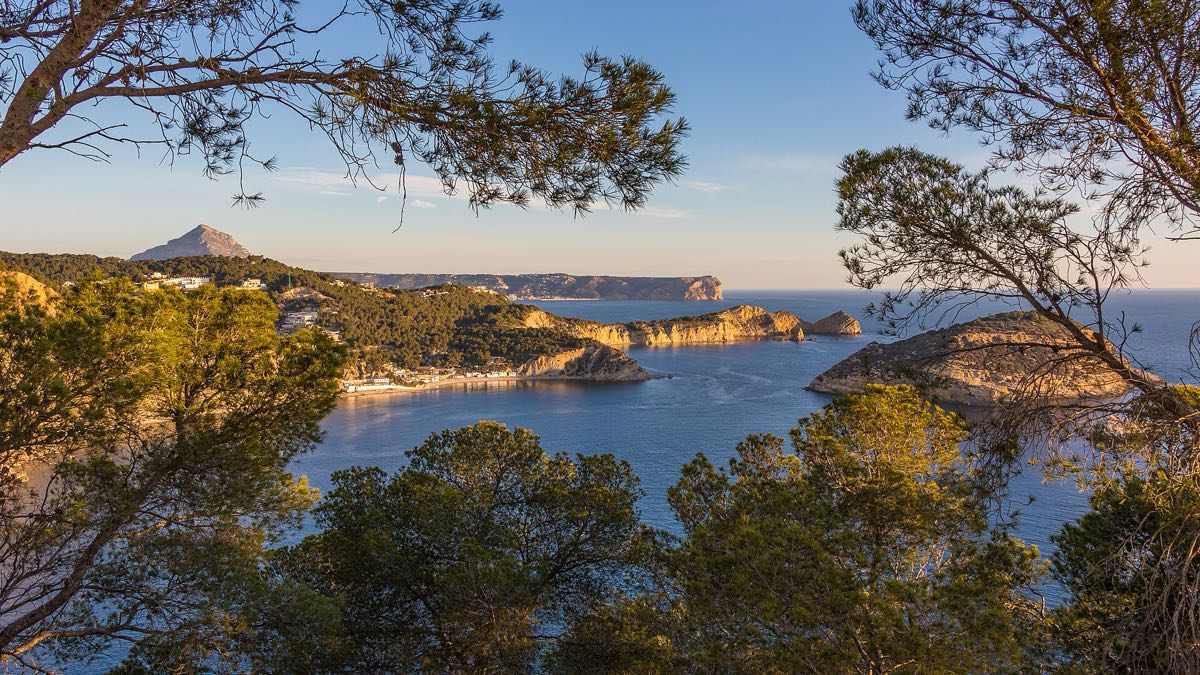
Snorkelling is mostly a question of geology, and Jávea's geology is on your side. There are no rivers here dumping silt into the bay, so the water runs extravagantly clear; the coast is rock rather than sand for most of its length, which means life has something to hold on to; and the coves face in enough different directions that one of them is nearly always sheltered, whatever the wind is doing. Add the posidonia meadows — vast underwater prairies of seagrass that filter the water still further — and you get conditions that would be the envy of coasts with far grander reputations. You don't need a boat, a course or a tank. You need a mask, and about four euros of ambition. Better still, the best of it sits within a short drive of wherever you're staying, so a change of wind means a change of cove rather than a cancelled day.
The marine reserve effect
At the northern end of the bay, the waters off Cap de Sant Antoni have been a marine reserve since 1993 — one of the older protected patches on the Spanish Mediterranean. Three decades of restricted fishing does something visible: fish inside and around a reserve grow bigger, bolder and more numerous, and the abundance spills outward along the coast. The practical upshot for a snorkeller is simple — Jávea's fish have not been taught to fear people, so they let you get close enough to feel properly outnumbered. Groupers, barracuda and some seriously large bream — fish you would rarely get near on an unprotected coast — turn up here as a matter of course.
Posidonia: the meadow is the reef
Look down from the cliffs and the seabed seems stained with great dark blots. That's Posidonia oceanica, a seagrass unique to the Mediterranean whose meadows can be thousands of years old — and it does the housekeeping that keeps this water so clear, trapping sediment, producing oxygen and sheltering the juvenile fish that later stock the whole coast. Swim slowly over a meadow and it turns out to be busy: wrasse working their lanes, bream holding in the current, the odd quicker flash. Give it care — the meadows grow back at a rate measured in decades.
People fly across the meadow looking for the interesting bit. The meadow is the interesting bit — hang still for two minutes and it comes out to look at you.
A local dive guide
Published monthly averages (as of 2026-07) — the honest picture, not a forecast.
Granadella: the headline act
The white-pebble cove of Granadella is Jávea's most famous swim, and underwater it earns the reputation. Rocky reef runs out along both arms of the cove; the southern side is the classic route, a staircase of boulders and gullies dropping into deep blue where the fish never stop moving. The pebbles mean no sand gets kicked into the water, so clarity here is often absurd. The price of fame is summer crowds: come early, or come in June or September when you can have the far rocks nearly to yourself. Kayakers use the cove as a base for poking down the coast toward the sea caves, which keeps the water's edge pleasantly busy with traffic worth watching between swims.
Cala Blanca: the gentle one
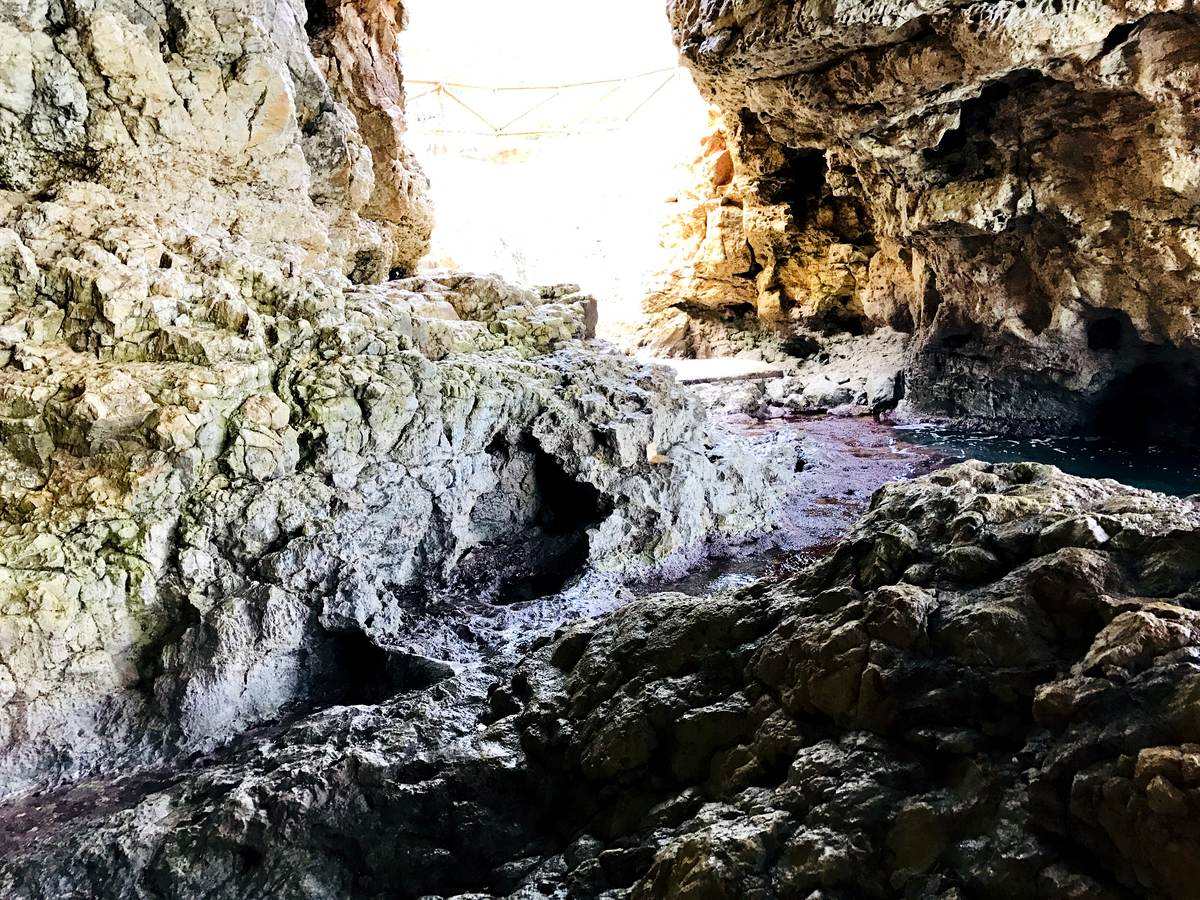
South of the Arenal, Cala Blanca is really a chain of small rocky inlets linked by paths, and it's the kindest place on this coast to learn. Entry is easy, the water is shallow for a long way, and the rock shelves are busy with blennies, anemones and small bream at a depth where even nervous swimmers can stand up and regroup. It's the natural choice for families graduating from the Arenal's sand to their first proper mask-down experience of the rocky coast.
Portitxol: the island channel
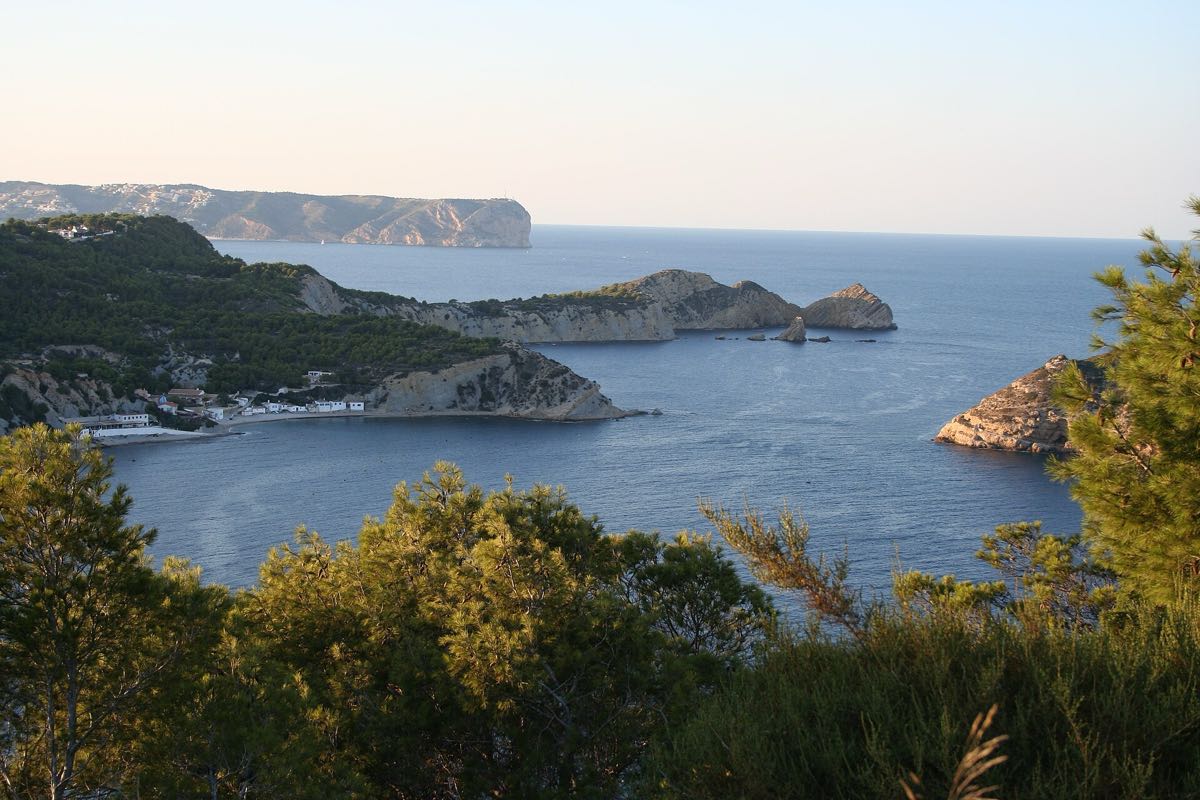
The bay at Portitxol — La Barraca to locals — faces its famous flat-topped island across a channel of astonishingly blue water, and the snorkelling here has a touch of theatre to it. Work the rocky edges of the bay rather than striking out across the middle; the margins are where the fish are, and the channel can carry boat traffic in summer. The mix of seagrass, boulder and open blue gives you three habitats in a single unhurried loop.
La Barraca and the Ambolo waters
The southern reaches — from La Barraca's boulder shores down toward Ambolo and the cliffs under Cabo la Nao — are the wilder end of the menu. The water is deeper, the rock more dramatic, the fish larger, and the shore access more of a scramble. Ambolo's shoreline has restricted access from land owing to rockfall risk, so its waters are best enjoyed from a kayak or boat swim-stop rather than an ill-advised climb. This is second-week snorkelling: do the easy coves first, then earn the drama. On the right day, with the right company, it's the closest this coast comes to feeling remote.
Season and water temperature
The Mediterranean here runs warm but honest. It bottoms out around 14–15°C in late winter — enthusiasts' territory, wetsuit obligatory — and climbs steadily through spring. By late June it's comfortable, and August peaks around 26°C, warm enough to stay in until your fingers wrinkle into topography. The sleeper months are September and October: the sea holds its summer heat long after the crowds leave, and autumn water is often clearer than August's. If you only get one week a year, September is the quiet insider's pick.
Kit: less than you think, better than you'd buy in panic
A decent mask is ninety per cent of the game — one that seals on your face without the strap doing the work. Add a simple snorkel, and consider two upgrades that punch above their price: swim fins, which turn tiring surface slogs into effortless glides, and rock shoes for the pebble-and-boulder entries that make up most of this coast. A rash vest spares your back from the midday sun, which grills a floating snorkeller with slow-roast patience.
The rules of the water
The reserve and the wider coast come with regulations, but they compress into an ethic that's easy to carry: you are a guest in a working ecosystem, and the correct souvenir is a memory. In and around protected waters the expectations are explicit rather than optional.
- Touch nothing living — not the seagrass, not the anemones, not the starfish that seems to be asking for it
- Take nothing: no shells, no stones from the seabed, certainly no creatures
- No spearfishing or collecting in reserve waters — rules are enforced, not decorative
- Anchor-free zones protect the posidonia; if you're swimming from a boat, moor responsibly
- Tow a surface marker buoy if you venture beyond the buoyed swim zones — boats can't miss what they can see
Quick answers
Do I need a wetsuit to snorkel in Jávea? Not in summer. From late June to early October the sea sits in the low-to-mid twenties and most people snorkel happily in swimwear, perhaps with a rash vest for sun protection. In May or November a shorty wetsuit extends your comfortable time in the water considerably, and in winter proper neoprene is non-negotiable for anything longer than a shrieking dip.
Where should a complete beginner start? Cala Blanca, without much debate. The entries are gentle, the water stays shallow over lively rock shelves, and there's plenty to see within standing depth while confidence builds. The Arenal's southern rocky corner works too. Save Granadella for your second outing and the deeper Portitxol water for when fins, deep water and scrambly entries all feel routine.
What will I actually see underwater? On an ordinary day: shoals of salema and bream over the seagrass, wrasse in half a dozen colourways patrolling the rocks, blennies gurning from crevices, sea urchins upholstering the boulders and the odd octopus doing its unconvincing impression of a rock. Luckier days add barracuda hanging like silver commas offshore. The reserve effect means everything is bigger and bolder than first-timers expect.
Places in this guide

Siesta Advisor
★ 5 (6,049 reviews · checked 7 Jun 2026)

Kanaloa Aventura
★ 5 (317 reviews · checked 7 Jun 2026)

TRX Live Xàbia
★ 5 (100 reviews · checked 7 Jun 2026)
No website
The Base Javea
★ 5 (90 reviews · checked 7 Jun 2026)

Espacio van Eijle
★ 5 (81 reviews · checked 7 Jun 2026)

Freediving Jávea
★ 5 (63 reviews · checked 7 Jun 2026)
Browse all Things to Do in the directory →
Run one of these businesses? Claim your listing free →
💬 Share this guide on WhatsApp
You've just read the free guide — this is the working version you take with you.
Was this guide useful?