Costa Nova: the sea-view ridge where Jávea meets the cliffs
Costa Nova is the pine-covered ridge that runs south from the Arenal toward Portitxol and Ambolo — a landscape of view-led villas, cliff-top lanes and some of the finest coves on the Costa Blanca. It is Jávea at its most dramatic, and it asks for a car in exchange.
The character
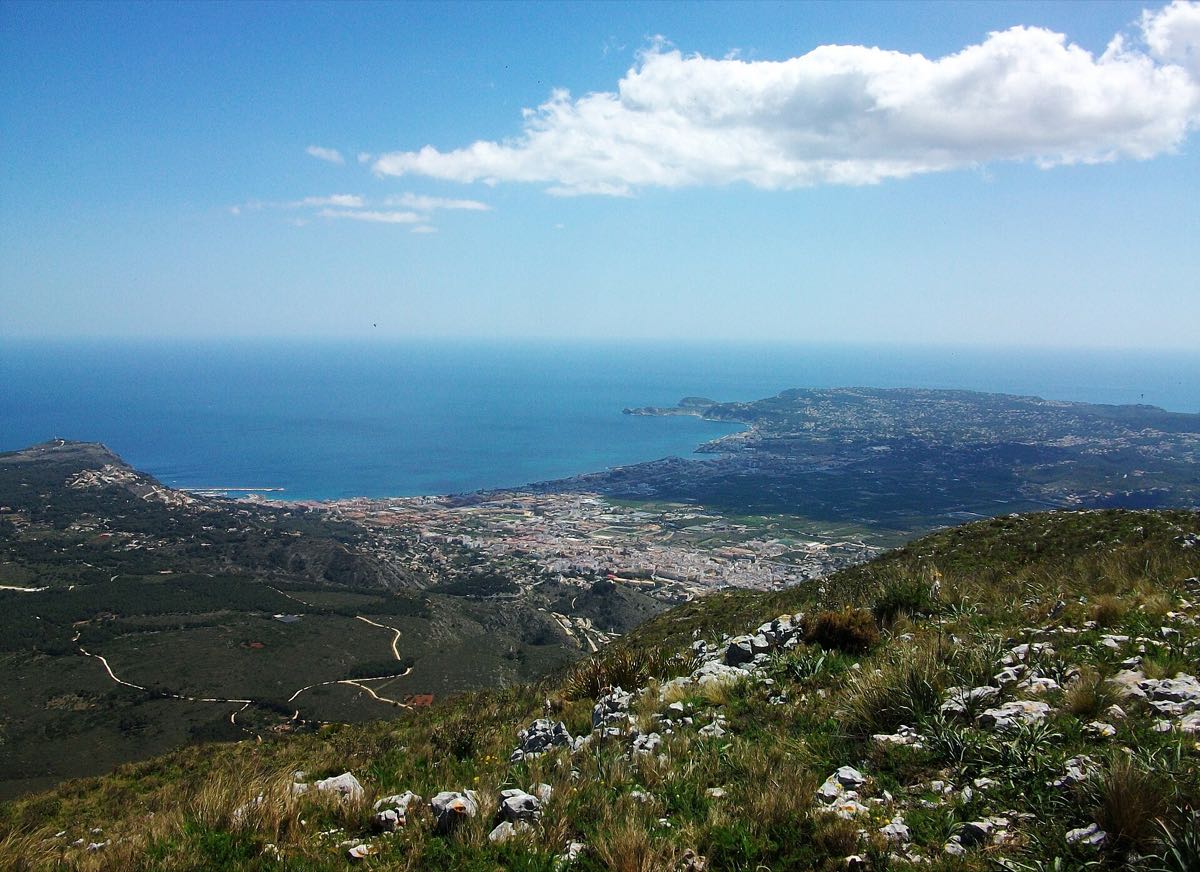
South of the Arenal, Jávea stops being a town and becomes a coastline. The road climbs into pines, the plots tilt toward the water, and suddenly every second driveway frames a slice of the Mediterranean. This is Costa Nova: the ridge that carries Jávea's villa country out along the cliffs toward Portitxol and Ambolo, where the land finally runs out at the Cap de la Nau. It is the zone people picture when they picture a villa in Jávea — white walls among green pines above blue water — and unusually for a postcard, the reality holds up. What the postcard omits is the geometry: this is a landscape of slopes, hairpins and single-track lanes, and it shapes daily life as much as the view does. Understand that trade at the start and the zone will never disappoint you; ignore it and the first wet-weather shopping run will explain it at length.
The view economy
Costa Nova runs on views the way other neighbourhoods run on schools. The ridge faces the open sea, and the whole zone is arranged — plots, orientations, asking prices — around who sees how much of it. A first-line cliff position, an elevated plot with the Portitxol island in frame, a glimpse between pines: each is a different product, and the differences are priced with surprising precision. The practical lesson for buyers is that in Costa Nova you are buying the view first and the house second. Houses can be rebuilt; sight lines cannot. Stand on the naya at the hour you'll use it, and check what could one day be built between you and the horizon. It is also worth saying that the view changes hourly — dawn silver, midday sapphire, evening pewter — and owners report that it never becomes wallpaper. That is what the premium actually buys: a horizon that keeps performing.
Pines, cliffs and the shape of the land
The character of the zone is as much botanical as architectural. The pine cover is dense and protected in stretches, the cliff edges are raw, and between them the lanes wander with a logic that predates any master plan. This gives Costa Nova a wildness that the manicured suburbs behind the Arenal never quite manage — you hear the sea on rough days, the cicadas own August, and the smell of hot pine is the zone's default perfume. It also means plots vary enormously: flat and buildable here, plunging and terraced there. Two neighbouring properties can offer entirely different lives. The reward for that irregularity is character no master-planned urbanisation can fake — no two houses, and no two views, are quite alike.
The coves: your local swimming pool is the Mediterranean
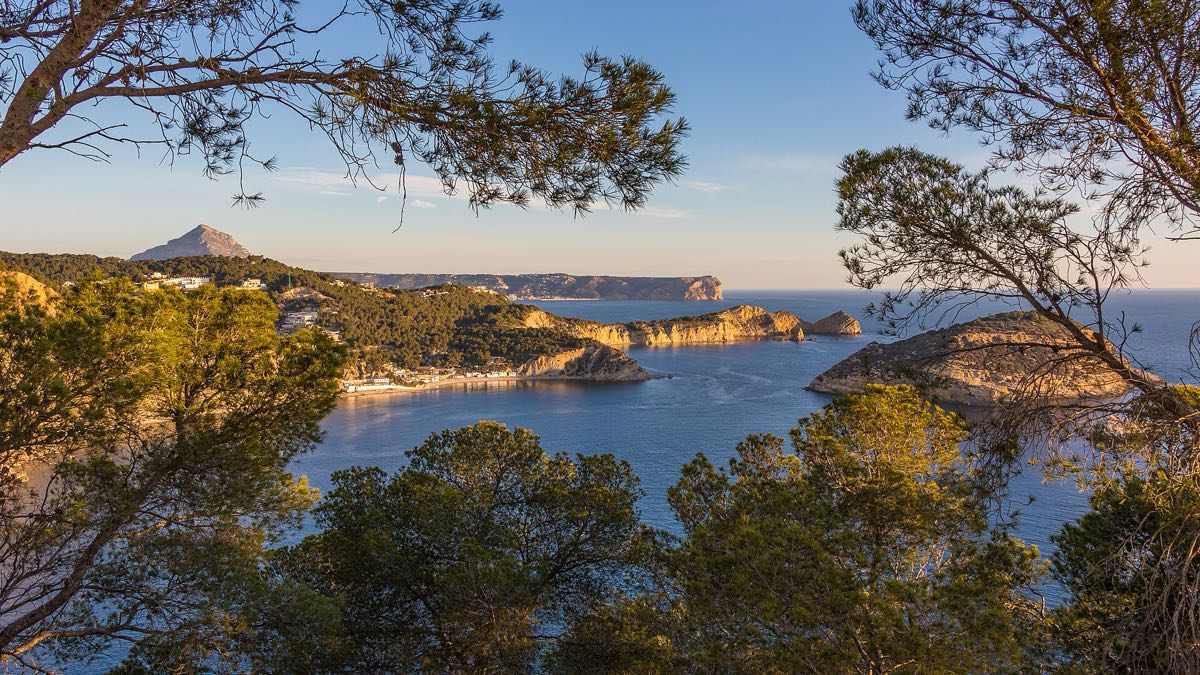
Below the ridge lie the coves that make the southern coast famous — Portitxol with its white-arched fishermen's houses and its island, La Barraca's little bay, Ambolo's wilder shore, and La Granadella a short drive on. For residents this is the zone's daily luxury: a swim before breakfast in September, a cala lunch on a Tuesday, snorkelling water that tourists queue an hour to reach. In July and August the coves fill and parking becomes sport; residents learn the early hours and the shoulder seasons, which is when this coastline is at its absolute best anyway. Owning here effectively adds a string of natural swimming pools to your deeds, and residents structure whole seasons around them — which cove for which wind, which hour beats the crowds, where the water stays warm latest into autumn.
The car question, answered honestly
There is no gentle way to say it: Costa Nova is car-dependent, fully and permanently. The distances are modest on paper but the gradients and the lack of pavements decide the matter. Every shop, school and restaurant beyond the handful on the Cap de la Nau road involves driving, and most households here run two cars. The compensation is that nothing you drive to is far: this is car-dependence measured in minutes rather than miles, and most residents stop noticing it within a season.
The homes
The stock spans half a century of villa-building: original 1970s and 80s houses with their arches and terracotta, comprehensive renovations wearing new glass and white render, and a confident wave of modern builds that treat the view as the client. Pools are near-universal; plots lean large; and orientation is everything, because a ridge villa lives or dies by how its terraces meet the sun and the sea. The renovation gap is wide here — an original villa and a rebuilt one on the same lane are different asset classes — which keeps the market interesting for buyers willing to take on works. Buyers comparing across decades should look past the finishes to the fundamentals — plot, orientation, view line and access — because those are the elements no renovation budget can ever change.
Evenings on the ridge
Costa Nova's days begin with light on the water — the ridge catches the sunrise side of the sea — and end with long golden evenings as the sun drops behind Montgó and the high ground inland. The evening hour is when the zone makes its strongest case: pines backlit, the sea turning to pewter, terrace dinners that run long because nobody wants to move. Residents will tell you the sundowner is the local unit of currency, and after a season here you will stop finding that funny and start finding it accurate. Even confirmed town-dwellers tend to concede the point after one September dinner on a Costa Nova terrace.
In summer we swim at Portitxol before the crowds arrive, and in winter we have the whole coast to ourselves. The car is the tax; the coast is the salary.
Dutch owner, Costa Nova resident
The seasons
Summer is vivid and busy — the coves draw day visitors, the lanes carry more traffic, and holiday lets bring a rotating cast to some streets. Winter flips the zone into something close to private: mild, luminous, walkable in the best sense, with the sea putting on its winter theatre below the cliffs. More streets go quiet here in winter than in the town-side zones, so if year-round bustle matters to you, ask street by street who actually lives there. The zone's calendar is, in effect, the town's calendar amplified — higher summer highs, quieter winter quiets.
Who it suits — and who it won't
Costa Nova suits view-first buyers, second-home owners who want the postcard, and full-time residents for whom driving everywhere is a shrug rather than a sacrifice. It rewards people who swim, walk cliffs and cook at home more than people who want to stroll to a café. Families make it work — plenty do — but the school run and the teenage years are car-borne by definition. If you want villa life with walkable texture, Pinosol argues its case; if you want maximum drama per square metre of horizon, this ridge is the answer. The happiest owners here chose the ridge knowingly, for what it is rather than for what a brochure implied.
Buying on the ridge
Buying here adds a few disciplines to the standard Jávea process. Verify the view cannot be built out — your lawyer should check the planning status of intervening plots, not just your own. On sloping land, scrutinise retaining walls, drainage and access; they are expensive to remedy and easy to underestimate on a sunny viewing. Coastal and pine-zone plots can carry protection constraints that shape any extension plans, so confirm buildability before you dream in concrete. None of this is unusual for a serious coastal market — it simply rewards buyers who do the diligence, with independent advice, before the terrace seduces them. Budget time as well as money: the best ridge properties reward buyers who viewed widely enough to recognise a rare one on sight.
Quick answers
Does every villa in Costa Nova have a sea view? No — and the market prices the difference sharply. The ridge faces the water, so views are common, but pine cover, plot position and neighbouring rooflines decide each case individually. Views range from full-horizon panoramas to framed glimpses. Judge each property on its own terrace, at the time of day you'll use it most.
Can I live in Costa Nova without a car? Realistically, no. The gradients, distances and absence of pavements make walking impractical for daily needs, and most households run two cars. A handful of restaurants and services sit along the Cap de la Nau road, but shops, schools and the town all require driving. Budget for the car as part of the lifestyle.
Is Costa Nova lively in winter? Quiet, in the best and worst senses. A solid core of year-round residents keeps parts of the ridge alive, while other lanes are mostly second homes that sleep from November. The coves and cliff walks are glorious and empty. If winter company matters, check the specific street's occupancy before you buy.
Schematic map — neighbourhood dots sit in their true relative positions from real coordinates; headland labels mark approximate compass bearings. Not to scale, and walking times are approximate.
Not sure which area? Take the 2-minute quiz →
Businesses & distances in Costa Nova →
Homes for sale in Costa Nova → · Long-term rentals →
Homes for sale & rent in Costa Nova →
Places in this guide

Aventura-T Kayak en Jávea
★ 5 (344 reviews · checked 7 Jun 2026)

The Vets Jávea
★ 5 (291 reviews · checked 7 Jun 2026)

Atina
★ 5 (183 reviews · checked 7 Jun 2026)
Redwood Solar S.L.
★ 5 (110 reviews · checked 7 Jun 2026)

Vive Jávea
★ 5 (88 reviews · checked 7 Jun 2026)
Sonia Garcia Comunicación
★ 5 (72 reviews · checked 7 Jun 2026)
Browse all Services in the directory →
Run one of these businesses? Claim your listing free →
💬 Share this guide on WhatsApp
You've just read the free guide — this is the working version you take with you.
Was this guide useful?