Cap Martí & Portichol: the prestige coast
Cap Martí & Portichol is Jávea’s prestige tier — front-line and near-front villas terraced above the Portitxol islet, with the wild coves of the south coast on the doorstep. Steep, green, private and view-driven: the top of the market.
The character
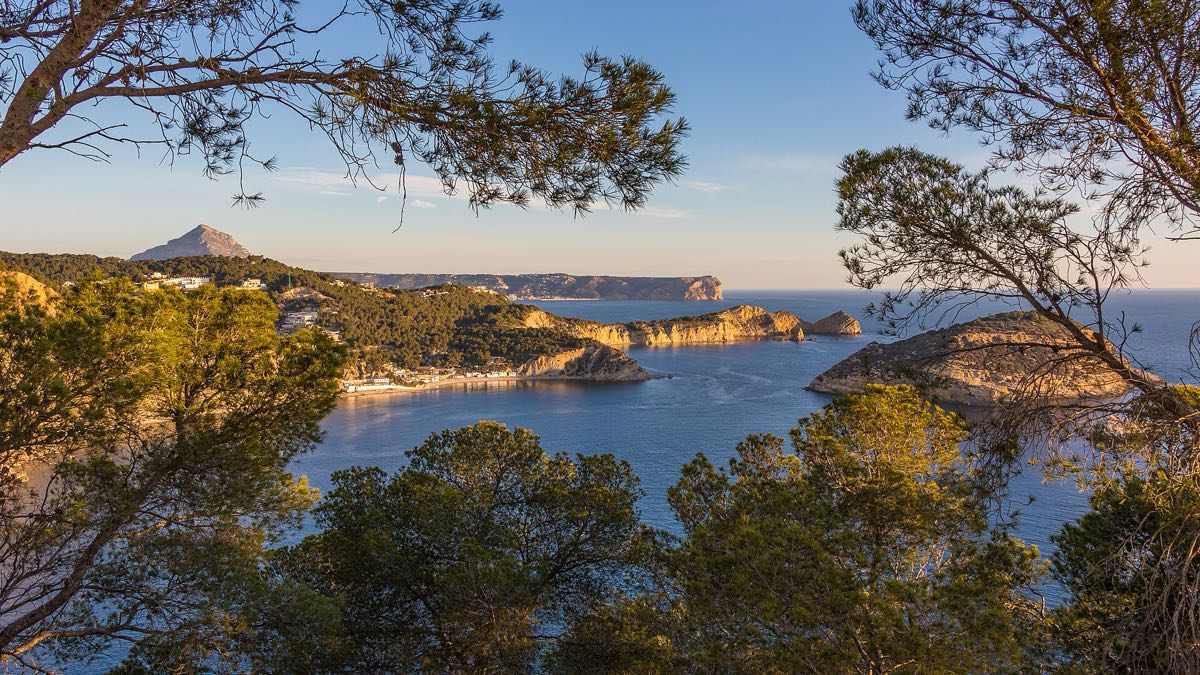
Every coastal town has an address that the others measure themselves against, and in Jávea it is this one. Cap Martí & Portichol is the green, steep-shouldered headland south of the Arenal, where front-line and near-front villas sit terraced above the Portitxol islet and the wild coves of the south coast begin at the garden gate. Almost every home here looks at the sea — the likelihood is close to total — and the whole quarter is built around that single fact. It is quiet in a way the beach zones never are: no promenade, no strip of bars, just pine, rock, water and the long blue line of the horizon. This is the top end of the Jávea villa market, and it feels like it.
The lie of the land
Geography explains everything about this zone. The headland climbs quickly from the water, so plots are stacked rather than spread, and the lanes that serve them wind, narrow and dip in a way that rewards a confident driver. That gradient is precisely what buys the views — each terrace of villas looks clean over the roof of the one below — but it also makes the area emphatically car-essential. Nothing here is a casual stroll: the nearest beach is about five hundred metres away as the gull flies, rather further as the road bends. Residents learn the rhythm quickly — drive down early, swim, drive back before the day heats up — and most would not trade the height for anything.
Portitxol and the bay
The zone’s emblem is the Portitxol islet, the flat-topped rock that anchors the bay below the headland and has become the unofficial crest of Jávea itself. The little whitewashed sea-houses along the shore at La Barraca, with their blue doors and fishing-cottage bones, are the most photographed corner of the municipality — the postcard that launched a thousand relocations. From the villas above, the islet is the fixed point of the view: it catches the first light in the morning and holds the last of it in the evening. Living here means watching that rock change colour all day, which sounds like a small thing until you have done it for a week and cannot imagine stopping.
Homes and architecture
Prime and prime-plus villas dominate the stock — as a guide, roughly €1M to €3.6M and beyond, the very top of the Jávea book. The architecture ranges from classic Mediterranean villas with naya terraces and mature pine gardens to sharp-edged modern builds that turn the entire seaward elevation into glass. What unites them is orientation: everything is designed around the water. Plots tend to be generous and private, screened by planting and gradient rather than walls. Be clear-eyed about what you are buying, though — this is a lifestyle-and-capital play rather than a rental-yield one. In Jávea the letting yield is beach-led, not hillside-led, and the buyers who thrive here are the ones who want the address for themselves.
The market in plain terms
The blended guide price across the zone sits around €1.80M — a mix indicator rather than a valuation, since the spread between a tired near-front villa and a rebuilt front-line one is enormous. Stock is scarce almost by definition: the headland cannot grow, protected land hems it in, and owners tend to hold for decades. That scarcity is the quiet engine of the zone’s value. When something front-line does come to market, it moves in a different rhythm from the rest of the town — fewer viewings, more serious buyers, and negotiations that turn on the quality of the view line and the plot rather than the price per square metre.
Who it suits
This is a zone for buyers at the villa-tier end who want three things above all: the view, the privacy and the address — and for whom car dependence and gradient are simply not issues. It suits established couples more than young families with school runs; it suits people who entertain at home rather than out; and it suits anyone whose idea of a perfect evening is a long dinner on the terrace watching the light go off the Portitxol. What it does not suit is the buyer who wants to walk to a café for the morning paper, or who imagines covering the mortgage with summer lets. Know which buyer you are before you fall for the photographs.
You do not buy on this headland to be near Jávea. You buy it to be above Jávea — with the whole of the bay laid out below you.
The Coastal Record
The honest trade-offs
Here is the counsel most listings will not give you. The same sea-view brief can be met a full price tier cheaper by trading the Jávea headland for Dénia, Benissa Costa or Benitachell — all within half an hour, all with dramatic water views of their own. What you give up in the trade is the specific Jávea package: the Portitxol as your foreground, the town’s international infrastructure ten minutes away, and the depth of resale demand that a famous address carries. For some buyers that trade is obviously worth making; for others the whole point is this coastline and no other. Do the drive, stand on both headlands, and decide with your eyes open.
Living here day to day
Daily life on the headland runs on a simple set of distances, and it pays to rehearse them before you commit. Everything works, but everything involves the car — and once you accept that, the logistics are easy by prime-coast standards. The pattern residents settle into is a morning loop — school run or swim, then the shop, then home before the heat of the day — and a second sortie in the evening for dinner on the Arenal or in the port. It sounds constraining on paper; in practice it takes about a fortnight to stop noticing. The essential numbers look like this:
- Nearest beach: about 500 m — minutes by car, a proper walk on foot
- Xàbia International College: roughly 8 km, an easy school run by local standards
- The Arenal’s restaurants and services: a short drive around the bay
- Alicante airport: about 96 km, comfortably done in just over an hour
- Weekly shop: supermarkets on the Jávea flat, ten minutes or so away
The coves on the doorstep
The headland’s greatest daily luxury is its coastline. Cala Granadella — repeatedly voted the best beach in Spain — is a few minutes south through the pine forest; Ambolo and the Portitxol bay sit directly below; and the Cap Prim headland walk starts practically from the neighbourhood’s edge. These are pebble-and-rock coves with extraordinarily clear water, made for snorkelling and early swims rather than bucket-and-spade afternoons. Residents treat them as a private amenity in the off-season and cede them gracefully to visitors in August. If your picture of coastal living is more mask-and-fins than sun-lounger, there is no better-placed address in the municipality.
The headland through the seasons
Summer here is glorious but social: the coves fill, the lanes carry visitor traffic, and the evening light show over the bay runs nightly to a full house. The revelation is the rest of the year. From October to May the headland returns to its residents — walkers on the cape paths, a handful of swimmers in the coves, log fires in the villas when the tramuntana blows. Winter sun on a south-facing terrace above the Portitxol is one of the Costa Blanca’s great undersold pleasures, and it is a large part of why so many owners live here year-round rather than treating it as a summer perch.
Quick answers
Is a car essential in Cap Martí & Portichol? Yes — realistically two, for a couple. The zone’s walkability is very low and the gradients are real, so the car is part of the lifestyle here in the way the lift is part of living in a tower. The compensation is that everything you drive to — beaches, schools, the town’s restaurants — is close in minutes, just not on foot. Visitors staying up here should book a hire car for the whole trip; there is no version of this headland that works without one.
Is this a good area for rental yield? Not primarily. Jávea’s letting yield is beach-led, concentrated around the Arenal, not hillside-led. Villas here can command striking headline rates in peak weeks, but the zone is best understood as a lifestyle-and-capital purchase: you buy the view, the privacy and the scarcity, and treat any letting income as a bonus rather than the plan. If income is the priority, look instead at the zones around the Arenal, where the town’s holiday demand actually concentrates and the sums work harder.
How does it compare with cheaper sea-view areas nearby? Dénia, Benissa Costa and Benitachell can all deliver a serious sea view for roughly a price tier less. What they cannot deliver is this specific combination — the Portitxol foreground, Granadella minutes away, and Jávea’s international town ten minutes behind you. Whether that premium is worth paying is a personal call; the only mistake is not comparing before you commit. Factor resale into the thinking too: famous addresses hold their demand in slower markets, and that resilience is part of what the premium buys.
Schematic map — neighbourhood dots sit in their true relative positions from real coordinates; headland labels mark approximate compass bearings. Not to scale, and walking times are approximate.
Not sure which area? Take the 2-minute quiz →
Businesses & distances in Cap Martí & Portichol →
Homes for sale in Cap Martí & Portichol → · Long-term rentals →
Homes for sale & rent in Cap Martí & Portichol →
Places in this guide

Restaurante Portitxol Jávea
★ 4.7 (695 reviews · checked 7 Jun 2026)
No websiteFlor de Sal
★ 4.1 (202 reviews · checked 7 Jun 2026)
No website
La Barraca
★ 2.5 (2,591 reviews · checked 7 Jun 2026)
Don Antonio Bar & Restaurant
No websiteL'Escut
No website
Toscamar
No websiteBrowse all Eat & Drink in the directory →
Run one of these businesses? Claim your listing free →
💬 Share this guide on WhatsApp
You've just read the free guide — this is the working version you take with you.
Was this guide useful?