Holiday lets in Jávea: licences, seasons and running it well
Owning a holiday let in Jávea can work beautifully — the demand is real and the season is long — but it is a licensed, regulated business, not a passive perk. This guide covers the VT licence landscape, what guests actually book, the summer-weighted occupancy shape, and the management decision.
The premise
A holiday let in Jávea sits at the meeting point of two true statements. First: the demand is genuine — this is one of the Costa Blanca's most loved family destinations, with a season that stretches well beyond August and a guest base that returns year after year. Second: short-term letting in the Comunitat Valenciana is a licensed, regulated activity, and the regulation has moved decisively in one direction — tighter. Neither statement cancels the other. Owners who treat the let as a proper small business, correctly licensed and professionally run, tend to do well. Owners who treat it as a casual sideline increasingly find the rules, the platforms and the neighbours all pointing the same way: not any more. This guide is written for the first kind of owner — and for buyers deciding whether to become one.
The VT licence: what it is
In the Comunitat Valenciana, a property let to tourists must be registered as a vivienda turística — the VT registration whose number you see on every legitimate listing. Registration brings the property inside a framework covering habitability standards, guest registration duties, display of the licence number in advertising, and compliance with both regional rules and local town-hall requirements. The framework has been substantially reformed in recent years — renewal requirements, municipal reports and community-of-owners considerations have all entered the picture — so treat any summary, including this one, as orientation rather than gospel. Confirm the current requirements for your specific property before you commit; a local lawyer or gestor who handles VT registrations weekly will give you the live answer in one meeting.
Why 'check the current rules' is the only honest advice
Tourist-rental regulation is one of the fastest-moving areas of Spanish property law, shaped by housing pressure, national registration initiatives and local politics all at once. Requirements differ between regions, evolve within them, and can vary with a property's type and situation — an apartment inside a community of owners faces questions a detached villa never meets. This is why serious owners build the rule-check into their process rather than treating it as a one-off: verify before buying, verify before listing, and re-verify at renewal. None of this is a reason to avoid the market. It is a reason to run the let like the regulated business it is. The owners who thrive under shifting rules are, reliably, the ones whose paperwork was boring all along.
What guests book in Jávea
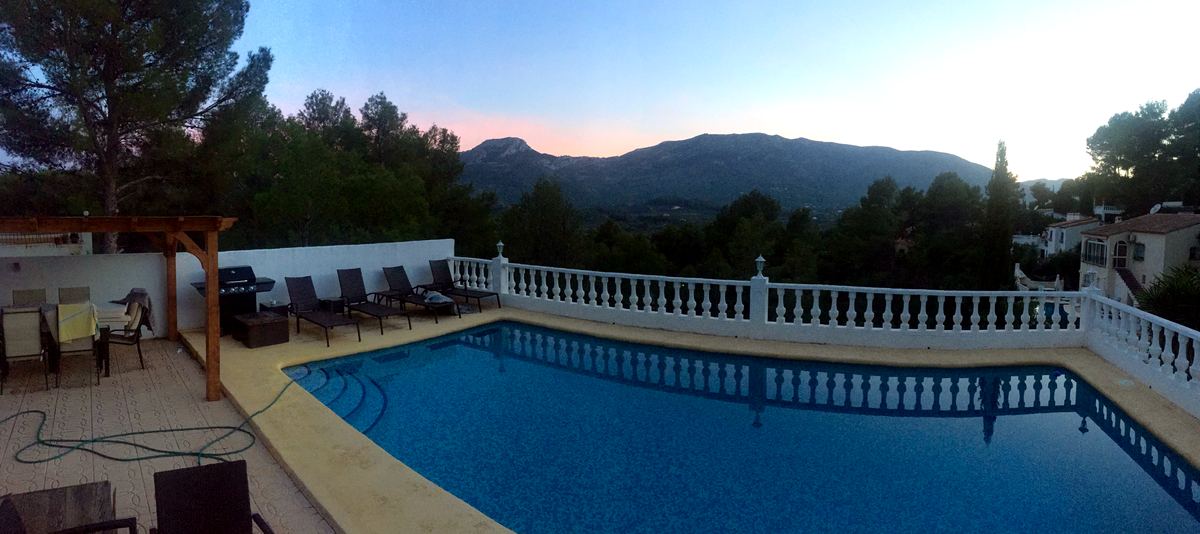
Jávea's guest profile is family-led and quality-led. The heart of the market is villas with private pools booked by families and multi-generation groups from the UK, the Netherlands, Germany, France and — increasingly, and especially in August — Spain itself. Around that core: couples taking shoulder-season weeks, walkers and cyclists in spring and autumn, and winter guests drawn by the mild off-season. What the market rewards is specific: a clean private pool, reliable air conditioning and wifi, outdoor dining that matches the bedroom count, walkability to something — beach, restaurants, a cove — and photography that tells the truth attractively. What it punishes is equally specific: tired interiors, ambiguous bed counts and any friction at check-in. Reviews compound all of this: in a market with abundant supply, a villa's rating history is its real storefront, and it is built one changeover at a time.

The shape of the season
Plan around a summer-weighted year, not a flat one. The occupancy curve rises through late spring, peaks emphatically in July and August, holds a strong September, then descends into a quiet-but-not-dead winter. The financial consequence: high summer does the heavy lifting of the whole year, shoulder months decide whether the year is good or merely fine, and winter is a bonus round rather than a pillar. Owners who internalise this shape make calmer decisions in February and better ones in May.
Pricing the year like an operator
Successful owners price seasonally and think in revenue per year, not rate per week. High summer commands multiples of winter pricing and books earliest; the skill is in the shoulders, where the right price fills weeks that the wrong price leaves dark. The other operator habit worth copying is protecting the peak: minimum stays in August, changeover days that make cleaning logistics survivable, and early-bird terms for the returning families who form the backbone of a good villa's calendar. Direct repeat bookings — no platform commission, known guests, respectful of the house — are the quiet profit centre of the mature Jávea let, and they are earned through guest experience, not marketing. None of this requires genius — only the discipline to plan the calendar in winter, before the enquiries start arriving.
Managed or self-run?
The single biggest operational decision. Self-running maximises margin and suits owners who live locally, enjoy hospitality and can be at the property within the hour when the pool pump dies on a Saturday changeover. Management companies take a meaningful share but bring the machinery that earns it in high season: marketing and channel management, guest vetting and registration compliance, cleaning and laundry logistics, maintenance networks and a phone that answers in August. Be honest about which owner you are before the first busy August teaches you expensively.
- Self-run works when: you live nearby, one property, you like guests, and you treat it as a part-time job — because it is one
- Management earns its fee when: you're abroad, the calendar is busy, compliance duties feel heavy, or your time is worth more than the margin
- The hybrid: local keyholder/cleaner plus owner-run marketing — the most common compromise, and the most dependent on finding excellent local people
Neighbours and the community dimension
Holiday lets live or die socially as well as legally. In villa zones, the friction points are noise after midnight, overflowing bins on the wrong day, and cars parked where they shouldn't be. In apartment buildings the stakes are higher: communities of owners have gained a real voice in whether tourist letting happens in their building at all, which is one more reason the pre-purchase legal check matters for apartments especially. The operator's playbook is unglamorous and effective: firm house rules in the listing, no party-size mismatches, a local contact neighbours can call, and the kind of guest vetting that prevents problems instead of apologising for them. In a town this size, reputation travels — among guests and neighbours alike.
The best marketing we ever did was giving the neighbours our phone number. Ten years, two callouts, zero complaints to the town hall.
Villa owner and long-time Jávea letting operator

Taxes exist — plan for them
Holiday rental income is taxable, and the framework differs with your residency status: Spanish tax residents declare it as part of their general position, while non-resident owners have their own filing obligations on Spanish rental income — including, in some circumstances, for periods when the property is merely available to them rather than let. Deductibility of expenses also varies materially with residency and circumstances, which can reshape the real return. We will not put numbers here because they change and your situation bends them; the durable advice is structural: engage a gestor or tax adviser before your first season, keep operator-grade records from day one, and price your expectations on post-tax, post-cost income. Good advice at the start costs a meeting; bad assumptions can cost a season.
The realistic bottom line
Run properly, a well-located Jávea villa with a pool is a sound seasonal business: a summer that books itself, shoulders that reward effort, and a repeat-guest dynamic that compounds. Run casually, it is a fast way to collect fines, one-star reviews and a frosty community meeting. The difference is not luck; it is licence-first compliance, diligent maintenance, seasonal pricing and someone reliable holding the keys. Owners should also stress-test the plan against regulation continuing to tighten — the direction of travel across Spain is clear, and a purchase that only works with maximal letting assumptions is a fragile purchase. Buy a home the numbers merely improve, not a spreadsheet with a pool. Jávea rewards the professional approach — and so, year after year, do the guests.
Guest registration: the 24-hour rule
Beyond the licence itself sits a duty that surprises many new owners: every guest must be registered with the authorities, hotel-style. Under Royal Decree 933/2021, holiday lets — not just hotels — must collect guest identity details and submit them through the national SES Hospedajes platform within 24 hours of arrival. In practice that means taking passport or ID details at check-in (self-check-in setups need a process for this, not a shrug) and uploading them promptly, every stay, all year. Management companies handle it as routine; self-run owners need to build it into the changeover rhythm from day one. It is unglamorous, it is legally required, and non-compliance carries sanctions — so treat it as part of the check-in, not an optional extra.
One let, two registrations: the VUT licence and the NIU
The paperwork now runs on two levels. Regionally, the Comunitat Valenciana requires the property to be registered as a vivienda de uso turístico (VUT) — the licence this guide has already covered, whose number must appear on every advert. Nationally, Spain has added a single short-term rental registry issuing a unique registration identifier (the NIU), which platforms such as Airbnb and Booking increasingly require before a listing can go live — and unregistered listings are being removed, not merely frowned at. The practical position for a Jávea owner: hold the regional VUT, obtain the national identifier, and display the numbers in your advertising. Your gestor or lawyer can confirm the current registration route in one meeting; the direction of travel is firmly towards no-number, no-listing.
Quick answers
Do I need a licence to rent my Jávea property to holidaymakers? Yes. Tourist letting in the Comunitat Valenciana requires VT registration, and the licence number must appear on your advertising. Requirements have tightened and continue to evolve — including renewal and municipal dimensions — so confirm the current rules for your specific property with a local lawyer or gestor before listing.
How full will my holiday let actually be? Expect a summer-weighted year: July and August effectively full at premium rates, strong June and September, patchier spring and autumn, and a quiet winter. Annual results vary widely with location, pool, presentation and pricing skill. Plan finances on the summer and shoulders; treat winter income as a bonus, not a pillar.
Should I use a management company or run the let myself? It depends on where you live and what your time is worth. Self-running suits local, hands-on owners with one property. If you are abroad, or the compliance and changeover logistics feel heavy, professional management usually earns its fee in higher occupancy and fewer crises. Many owners land on a hybrid with trusted local staff.
What tax will I pay on my Jávea rental income as a non-resident? Non-resident rental income is declared on Modelo 210, and residency decides the deal. Owners tax-resident in the EU/EEA pay 19% and may deduct expenses attributable to the letting — IBI, cleaning, utilities, agency fees — in proportion to the days actually let. Owners resident outside the EU/EEA, including the UK post-Brexit, pay 24% on gross income with no deductions at all, which changes the arithmetic of a marginal let considerably. Filing runs on a quarterly or annual rhythm depending on your circumstances, and the calendar has been reformed in recent years — so have your gestor confirm your current filing pattern rather than copying a neighbour's.
Places in this guide

Aventura-T Kayak en Jávea
★ 5 (344 reviews · checked 7 Jun 2026)

The Vets Jávea
★ 5 (291 reviews · checked 7 Jun 2026)

Atina
★ 5 (183 reviews · checked 7 Jun 2026)
Redwood Solar S.L.
★ 5 (110 reviews · checked 7 Jun 2026)

Vive Jávea
★ 5 (88 reviews · checked 7 Jun 2026)
Sonia Garcia Comunicación
★ 5 (72 reviews · checked 7 Jun 2026)
Browse all Services in the directory →
Run one of these businesses? Claim your listing free →
💬 Share this guide on WhatsApp
You've just read the free guide — this is the working version you take with you.
Was this guide useful?