The best sunset spots in Jávea: a connoisseur's guide to the golden hour
Jávea faces east, which means its sunsets are a connoisseur's game — light on cliffs and mountain rather than sun-into-sea. Here are the spots that reward the initiated, from the Cap de Sant Antoni viewpoint to Cabo la Nao's moonrises, plus photography notes.
The east-facing confession
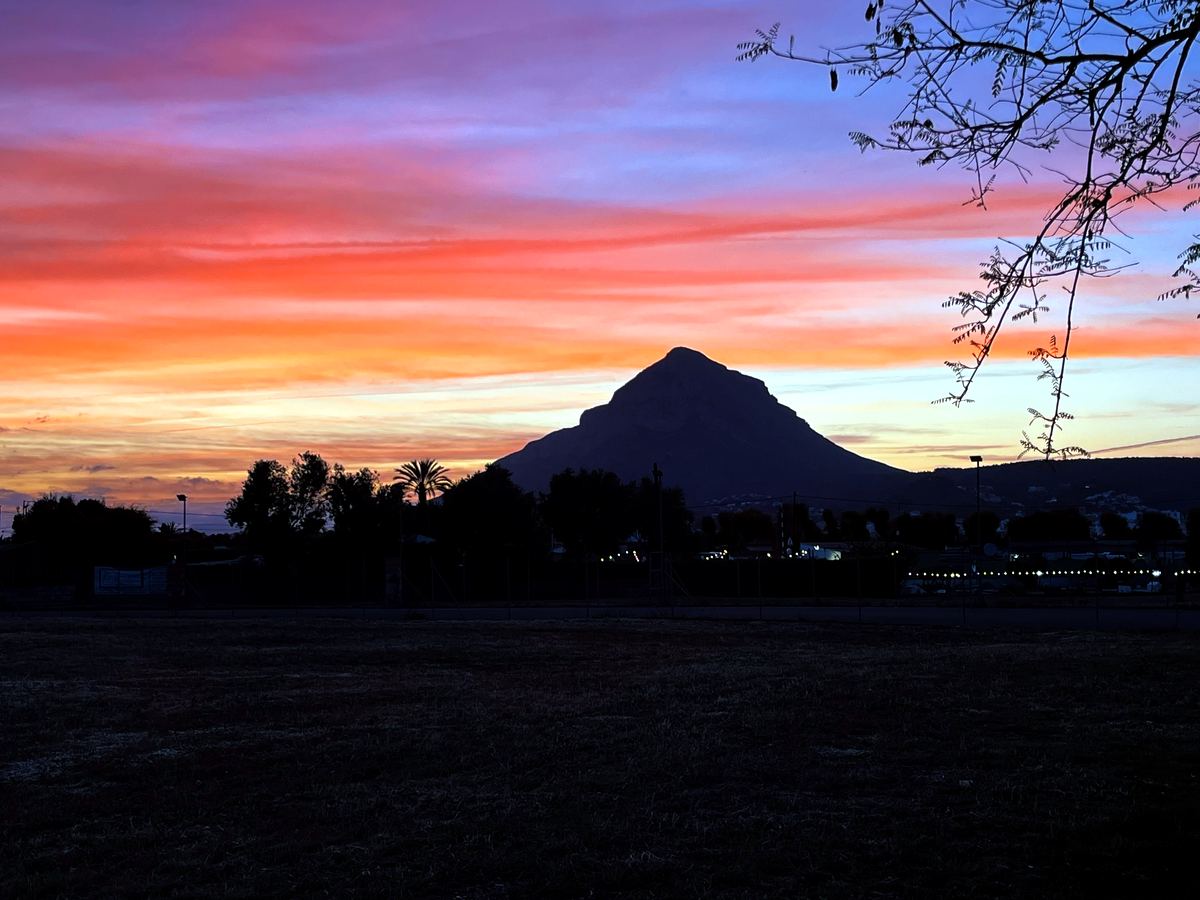
Let's begin with the fact the postcards omit: much of Jávea's coast looks east, so the sun rarely drops into the sea in front of you. In June it sets in the north-west, towards the Montgó side, and by December in the west-south-west over lower inland ground (bearings of about 301 and 240 degrees, our NOAA calculation for Jávea). Anyone camped on the Arenal at dusk expecting a plunge into the Mediterranean will watch it exit stage right instead. That does not make the evening dull; it changes where you stand: the ones watching the light rather than the sun, on cliffs and slopes where the coast turns copper while the sea goes to silk.
The physics of a Jávea evening
Understanding the geometry improves every choice below. As the sun drops in the west behind the high ground, the east-facing cliffs and the sea below become the screen the sunset projects onto, with the Montgó as the biggest canvas in summer, when the sun sets towards it. The show has two acts: the golden hour before sundown, when low light rakes across the coast, and the slower second act afterwards, when pinks and violets bloom over the water.
Cap de Sant Antoni: the establishment choice
The viewpoint at Cap de Sant Antoni, by the lighthouse road above the port, is an official mirador (Ajuntament listing) and the classic for good reason. You look down on the whole amphitheatre of Jávea: port, bay, Arenal, and the run of headlands south. As dusk settles, the town switches itself on beneath you, and the harbour breakwater draws its lit line across darkening water. It is a good spot for first-time visitors.
The Montgó slopes and the windmills
For elevation without mountaineering, try Els Molins, an official mirador with the old windmills, which the Ajuntament dates to the 14th century and describes as no longer in use, without blades or roofs: ruins, not restored mills. From there you look across the bay as the light goes long, with the mills' silhouettes as foreground. We have not checked the access, parking or path, so check on site, and take a torch for the way back: twilight is brief.
La Grava and the harbour lights
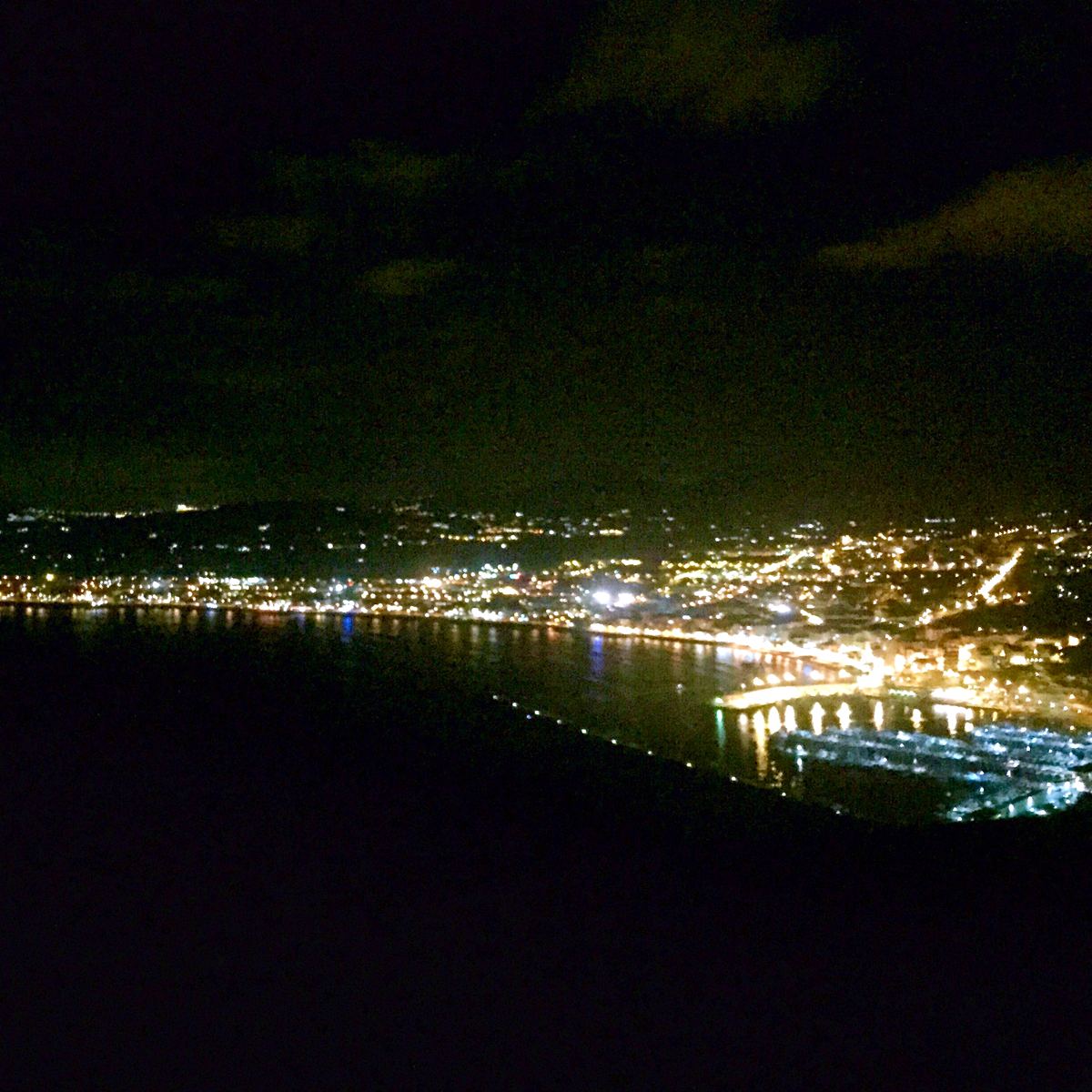
Sunset at La Grava, the pebble beach by the port, is Jávea's most urbane version of the ritual — no hike, no cliff, just a bench or a beachside table while the evening assembles itself around the harbour. The masts go gold, the water turns to hammered metal, and as the light drains, the port's lamps and the fishing fleet's lights take over the composition entirely. This is the sunset for people who believe the golden hour pairs best with something cold within reach, a position with much to recommend it.
Granadella, after the crowds go home
By day, summer Granadella is a triumph of demand over parking, and the Ajuntament's summer rules matter for an evening visit: in 2026 the barrier ran daily from 2 June to 13 September, with paid parking (EUR 9 per vehicle) from 09:00 to 19:00, which is before sunset from June to early September. We cannot say how the barrier works after 19:00, so check before you plan an evening swim. We have not verified when the cove loses direct sun; the white pebbles and calm water in the evening are our observation.
Cabo la Nao: drama in two directions
The Cabo la Nao headland (Cap de la Nau) is, per the Ajuntament, the easternmost point of the Valencian coast, and it plays the evening game differently. The cape faces east, so the sunset happens behind you, over the land. Looking out to sea, the sky brightens before the moon rises: a full moon rises roughly opposite the sun, so on a full-moon evening it can come up over the sea around sunset. Check a moon table for the date; we have not timed it from the cape. The lighthouse stands about 122 m above the sea.
The old town's rooftops
Inland, Jávea's historic centre plays its own quieter hand: from terraces and upper-floor bars the evening light turns the church fortress and tiled roofs amber. We have not checked individual terraces, so look for a table with a view on the day. It lacks the sea, but it has atmosphere and proximity to dinner.
Golden hour photography: making the light behave
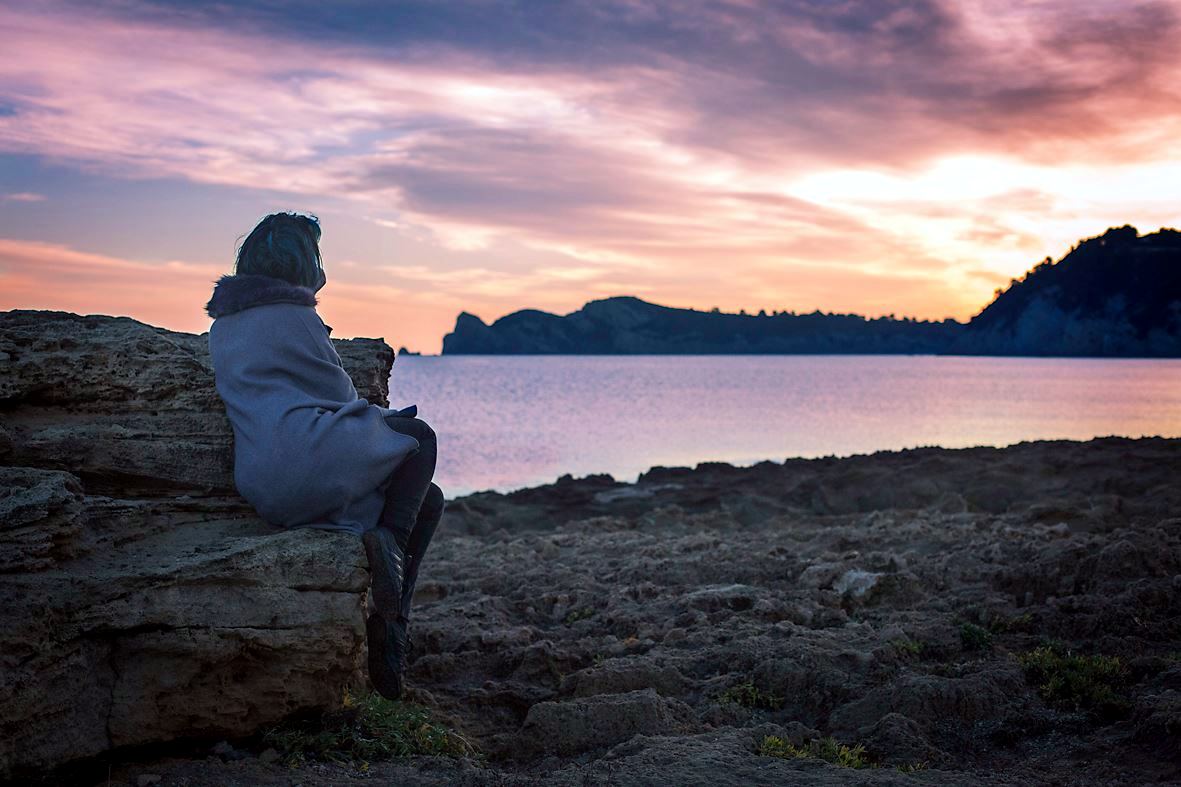
Jávea's east-facing geometry is a gift to photographers who work with it rather than against it. The essentials travel light:
- Shoot east during golden hour — the raking light on cliffs, boats and the Montgó is the show, not the sun itself
- Stay for blue hour: harbour lights against violet water at La Grava outperform most sunsets
- Use foreground — pines, the lighthouse rails, the old windmill ruins — because big views need anchors
- White pebbles at Granadella act as natural reflectors; faces light beautifully there at dusk
- A phone is plenty if you lock exposure on the sky and let the land go dark
- For moonrises at Cabo la Nao, a long lens and something steady to lean on repay the effort
Timing the evening
Sunset in Jávea runs from about 17:38 in early December to about 21:27 around the June solstice (our NOAA calculation for Jávea, not an official table). The good light starts before the listed minute. As a rule of thumb, golden hour delivers roughly the final forty minutes of direct sun, and afterglow and blue hour add another half hour; haze and season change this. Build the evening accordingly: viewpoint first, dinner after.
Quick answers
Where is the best sunset in Jávea? For the full panorama, the Cap de Sant Antoni viewpoint above the port. For a different mood, Cabo la Nao, where the sun sets behind you and a full moon can rise over the sea (check a moon table). For comfort, La Grava, with harbour lights and refreshments. No source ranks them; this is our view.
Can you watch the sun set over the sea in Jávea? Mostly no. Much of Jávea's coast looks east, so the sun sets behind the land: in the north-west in June and the west-south-west in winter. What the coast offers instead is the light on cliffs and mountain after sundown and colour over the water. Sunrise over the sea is the better show here.
Do I need to hike to reach these viewpoints? Mostly not. Cap de Sant Antoni, Cabo la Nao and La Grava are reachable by car with short walks at most, and the old town asks only that you find a terrace. Els Molins has its own access, which we have not checked. For Granadella, plan around the summer barrier and paid-parking hours. The Ajuntament's viewpoint route lists 15 miradores; check access for each before you go.
Places in this guide

Siesta Advisor
★ 5 (6,049 reviews · checked 7 Jun 2026)

Aventura-T Kayak en Jávea
★ 5 (344 reviews · checked 7 Jun 2026)

Kanaloa Aventura
★ 5 (317 reviews · checked 7 Jun 2026)

TRX Live Xàbia
★ 5 (100 reviews · checked 7 Jun 2026)
No website
The Base Javea
★ 5 (90 reviews · checked 7 Jun 2026)

Espacio van Eijle
★ 5 (81 reviews · checked 7 Jun 2026)
Browse all Things to Do in the directory →
Run one of these businesses? Claim your listing free →
💬 Share this guide on WhatsApp
You've just read the free guide — this is the working version you take with you.
Was this guide useful?