Vegetarian & vegan Jávea — greener than it looks
A fishing town on a rice-and-jamón coast sounds like hard work for plant-based eaters, but Valencian cooking hides a wealth of vegetable dishes. You just need the vocabulary, and one warning about fish stock.
The honest picture
Let us not oversell it: Jávea is a fishing town on a coast that reveres jamón, and the default menu leans hard on things that once swam or trotted. But the honest picture is far better than the pessimistic one. Valencian cooking grew out of huertas — market gardens — as much as harbours, and a whole repertoire of vegetable dishes hides in plain sight on traditional menus. Add a growing plant-based scene, a produce market and a Thursday street market, and a food culture that considers vegetables worth grilling properly, and the plant-based visitor here eats well. Not effortlessly — well. The difference is a little vocabulary and one crucial question about stock. What follows is the realist's map: what the tradition already offers, where the new kitchens cluster, what to ask before the rice is committed, and how to let the market do the heavy lifting.
The Valencian larder is on your side
Start with what the tradition already gives you. Espencat is a Valencian dish of roasted (or boiled) vegetables, typically peppers and aubergine, dressed with olive oil. Its salty cousin, esgarraet (esgarrat in Alcoi), adds shredded salt cod, so if you see roasted peppers on a menu, ask whether there is cod in it. Coques, the local flatbreads, come topped with roasted vegetables or tomato and onion. Verduras a la brasa — vegetables over coals — appear wherever there is a grill, which is everywhere. Then the supporting cast: pan con tomate, gazpacho in summer, garlicky sautéed spinach with chickpeas, stuffed peppers, olives in a dozen dressings and almonds by the fistful. None of this was invented for vegetarians; all of it works beautifully for them. The trick is to read menus horizontally rather than vertically: skip the mains built around a protein and assemble a table of starters, salads and grilled vegetables instead — which is, not coincidentally, how locals often eat in summer anyway.
The rice question
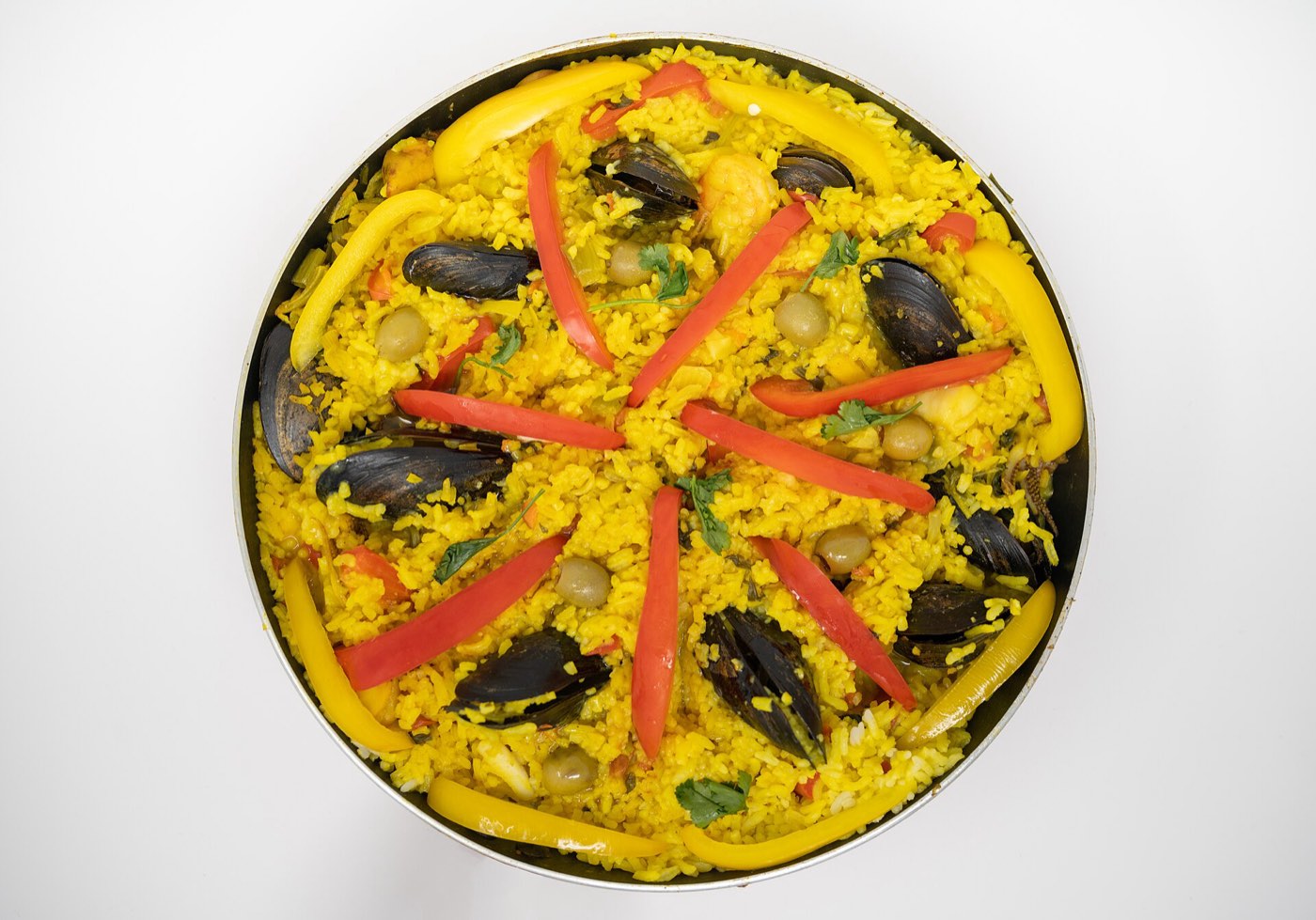
Rice is the region's religion and vegetarians are not excluded from worship — with caveats. A vegetable rice (arroz de verduras) is worth asking for. The caveat is the foundation: some kitchens build rices on fish stock, so ask before it is cooked. The fix is to ask — clearly, kindly, in advance — and the better restaurants will happily cook a true vegetable rice, especially for two or more people ordered ahead. When they do, it is glorious: smoky, saffron-deep and utterly unapologetic.
In Valencia, a vegetable is not a garnish. It is a small emergency if it's missing.
the huerta worldview, summarised
The fish-stock problem, stated charmingly
Here is the one genuine hazard, delivered with affection: fish stock can turn up in rice and soup. Fish and its products are one of the 14 allergens that restaurants must be able to tell you about for food sold without packaging (EU Regulation 1169/2011, art. 44), so 'does this contain fish?' is a question you are entitled to an answer to; a vegetarian or vegan label has no legal definition that we found. The solution is precision, not suspicion — ask about the caldo specifically, and you will get a straight answer and usually a helpful one.
Dedicated plant-based restaurants
We do not rank plant-based restaurants here and we have not checked individual venues. The directory lists vegetarian restaurants in Jávea with their reviews: see the vegetarian restaurants in Jávea page. Many traditional restaurants also mark vegetarian dishes, and the Italian and Asian kitchens tend to adapt more easily than the rice does (our opinion).
Ordering with confidence — a phrasebook
Spanish kitchens respond wonderfully to clear, friendly specificity. A few phrases carry you through almost any menu on the coast.
- Soy vegetariano/a — I'm vegetarian; soy vegano/a — I'm vegan
- ¿Lleva carne o pescado? — does it contain meat or fish?
- ¿Está hecho con caldo de pescado? — is it made with fish stock?
- Sin jamón / sin atún / sin huevo, por favor — without ham / tuna / egg, please
- ¿Qué me recomienda sin carne? — what do you recommend without meat?
- Una tostada con tomate y aceite — the reliably vegan breakfast
The market is your kitchen
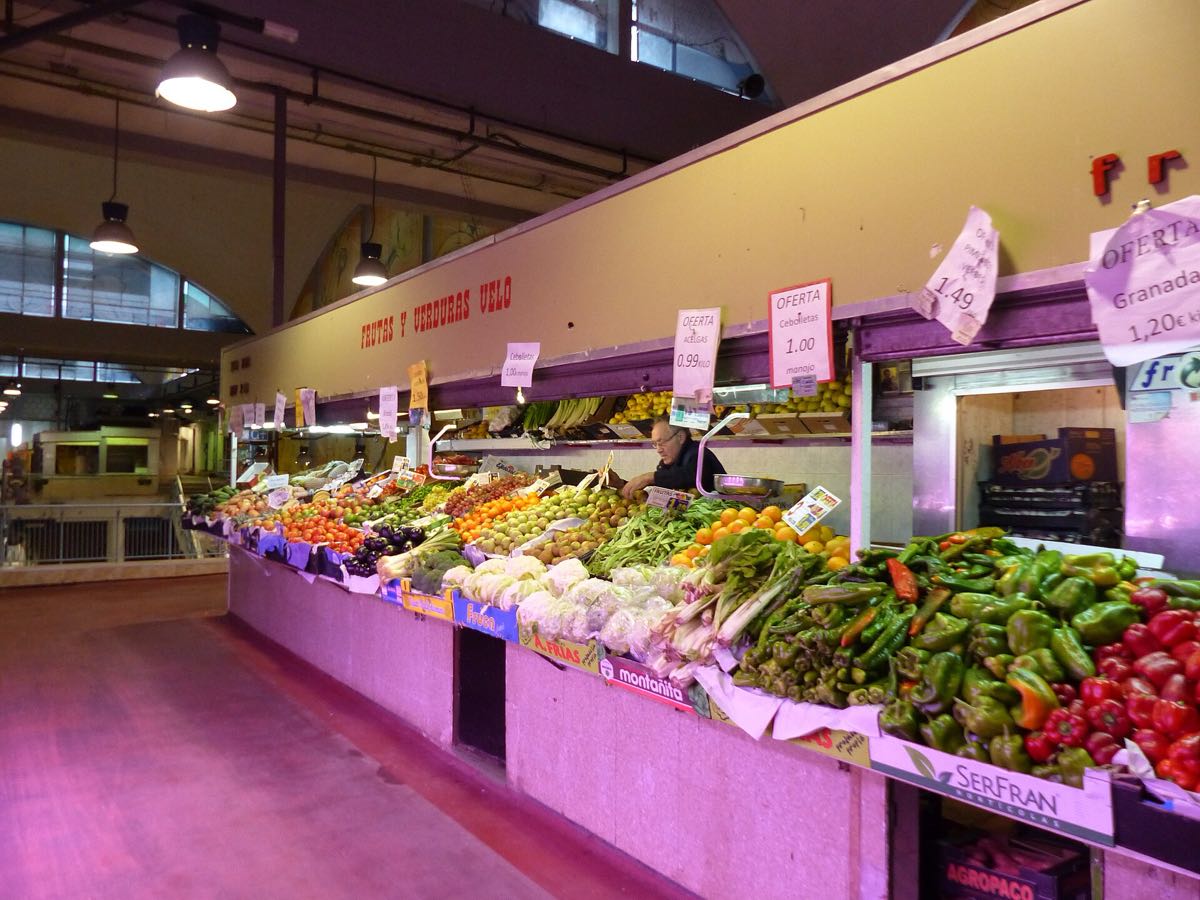
If you are self-catering, the plant-based equation changes, because produce is the easy part. The Mercat Municipal in the old town (Plaça Celestino Pons) has fruit and vegetable stalls; we found no published hours, so check on the day. The Thursday street market runs 7:30 to 14:00 according to the regional tourism portal, with long rows of produce sellers. Buy what the season offers, add good oil and bread, and half your holiday cooking composes itself.
What the seasons hand you
As a general Mediterranean pattern (not a Xàbia harvest calendar): spring brings artichokes and broad beans, summer tomatoes, peppers, aubergines and melon, autumn grapes, pomegranates and oranges, and winter citrus, chard and spinach. Eating this way is a rhythm rather than a restriction, and the simplest market lunch routinely beats more ambitious cooking.
Sweet things and small mercies
The dessert news is unexpectedly good. Horchata is the Valencian tiger-nut drink, served ice-cold. The name is protected for the natural drink made with Chufa de Valencia tiger nuts and sugar, so a certified horchata is plant-based; industrial ones differ, so ask for the Consejo Regulador label. Almond-based sweets are often egg-light or vegan-friendly, so ask, and fruit here needs no advocacy: a plate of melon or chilled orange slices ends a summer dinner better than most patisserie.
A realist's scorecard
So, the verdict. Vegetarians will eat well in Jávea with little friction: between espencat, coques, grilled vegetables, tortilla, cheeses and adaptable rices, traditional menus alone will feed you handsomely. Vegans need more strategy: the fish-stock question, the egg-and-honey check and the market's abundance. Bring curiosity and two sentences of Spanish; the town does the rest.
Quick answers
Are there fully vegan restaurants in Jávea? Yes: the directory lists vegetarian restaurants in Jávea (we do not rank them), and elsewhere in town you can compose meals from the traditional vegetable repertoire — espencat, grilled vegetables, salads, coques — and ask the fish-stock question before ordering rice.
Can I get a vegetarian paella? Often, yes: ask for an arroz de verduras. The essential check is the stock, so ask for it 'sin caldo de pescado' when you order. Rices are frequently made for a minimum of two people and are worth ordering in advance.
What should a vegan order at a traditional bar? Start with tostada con tomate y aceite (confirm no butter), olives, salted almonds or peanuts, pan con allioli only if the allioli is eggless (ask), gazpacho in summer, espencat (check there is no salt cod, as in esgarraet), and grilled vegetables. Drink horchata, local wine or a caña. It is less a compromise than it sounds — half of these are the best things on the counter anyway.
Places in this guide

Tescafes
★ 5 (140 reviews · checked 7 Jun 2026)
No website
Karolida
★ 5 (80 reviews · checked 7 Jun 2026)
No website
Carú Arrocería
★ 5 (47 reviews · checked 7 Jun 2026)
No websiteCatering4u
★ 5 (27 reviews · checked 7 Jun 2026)
SAÓ Mediterráneo
★ 5 (26 reviews · checked 7 Jun 2026)

Villa Celeste
★ 5 (20 reviews · checked 7 Jun 2026)
No websiteBrowse all Eat & Drink in the directory →
Browse all Vegetarian-friendly dining in Jávea →
Run one of these businesses? Claim your listing free →
💬 Share this guide on WhatsApp
You've just read the free guide — this is the working version you take with you.
Was this guide useful?