Las Rotes: living on the rocky coast
Las Rotes is Jávea's quiet rocky-coast pocket — high-end villas and sea-view apartments above crystal snorkelling coves, with no sand and no intention of apologising for it. It suits swimmers, snorkellers and peace-seekers who want the water itself, not the beach scene around it.
The character
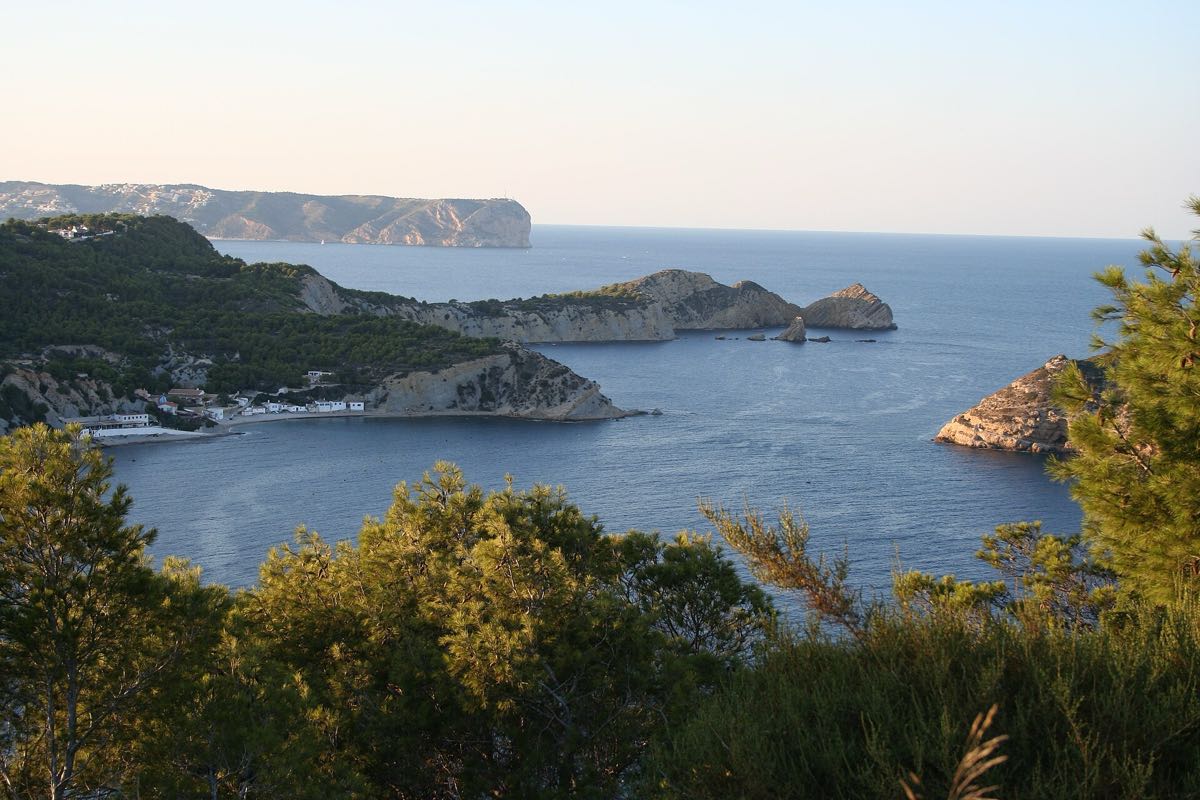
Las Rotes is Jávea's quiet rocky-coast pocket — a high-end scatter of villas and sea-view apartments above some of the clearest snorkelling water on this stretch of the Mediterranean. There is no sand, no rank of loungers, no bar with a laminated menu; there are sunbathing rocks, pine-shaded lanes and coves — Cala Blanca among them — where the water is transparent enough to make you doubt its depth. The Cap Prim and Portitxol headlands supply the backdrop, the old town sits a short drive inland, and the whole zone runs on a lower pulse than the Arenal. People here do not go to the beach; they go for a swim. The distinction, it turns out, matters.
A note on the name
One clarification before anything else: there are two rocky coasts called Las Rotes on this bay, and they belong to different towns. Dénia has its own Les Rotes strip on the road to Dénia; this guide covers Jávea's Las Rotes, the Cala Blanca and La Barraca side, on the south-east coast, past the Arenal and before Cap Prim. Estate listings occasionally blur the two, so check the map, not just the name.
The water
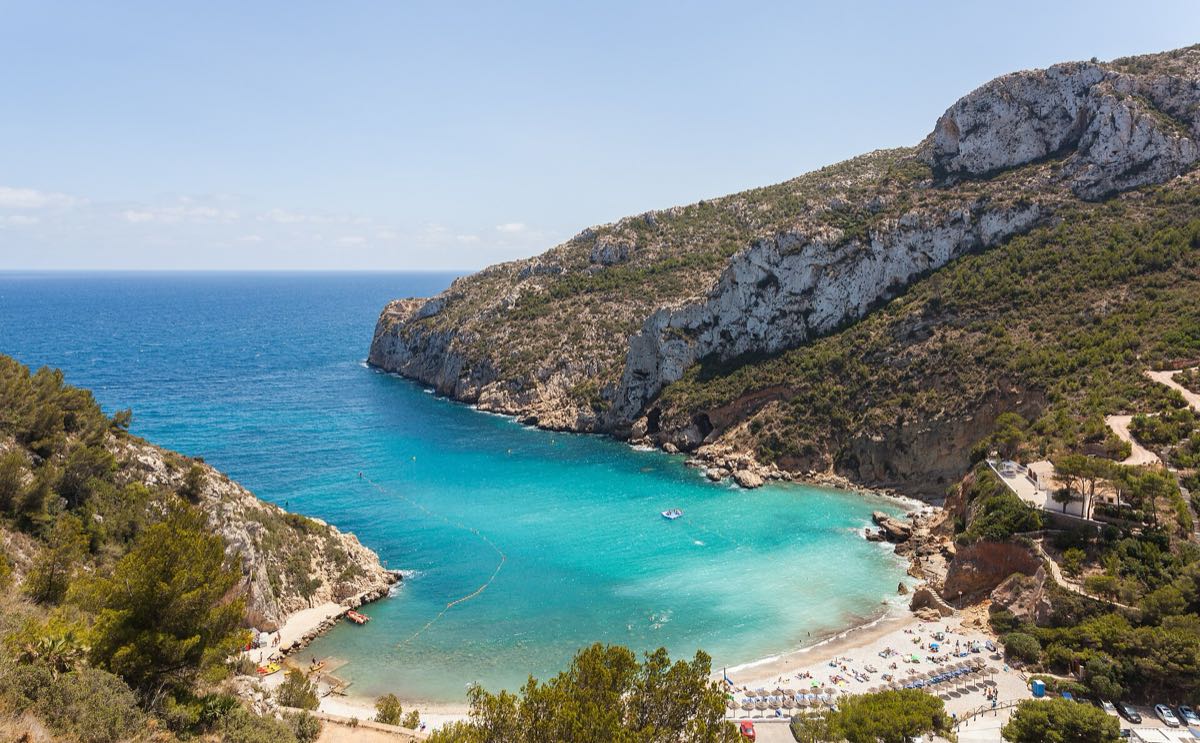
The zone's entire argument is the water. Cala Blanca is the flagship — a rocky snorkelling cove where fish drift over pale stone in improbable clarity — and La Barraca and Cala Sardinera continue the theme along a protected shoreline that development largely left alone. Because the coves are rock rather than sand, nothing churns; visibility that other resorts advertise as an excursion is here simply the view from your towel. Masks and fins live by the front door the way umbrellas do in other climates. If your idea of coastal living involves actually being in the sea most days, rather than beside it, this is the strongest candidate in Jávea.
No sand — and why that is the point
Let us be honest, because the zone is: there is no sandy beach in Las Rotes, and anyone who needs one daily should buy near the Arenal instead. What the rocks give in exchange is considerable. The water stays clear because there is no sand to stir; the coves stay quiet because there is nowhere to plant five hundred umbrellas; and the shoreline keeps a wildness that groomed beaches surrendered decades ago. Residents develop a connoisseur's knowledge of which flat rock catches the morning sun and which ladder gets you in without ceremony. The sand, when the mood strikes, is a short drive away — which most here find is precisely far enough.
Homes over the water
The stock splits two ways: detached villas on the lanes above the coves, and sea-view apartments. We found no published sea-view share or price per square metre for the zone, so we do not give one: view the property at the time of day you care about.
The daily logistics
Las Rotes is car-light rather than car-free. Measured on OpenStreetMap routing (21 November 2026) from a point at Cala Blanca: the Arenal beach is 1.9 km by road, the Old Town 5.0 km, the port 4.8 km, the nearest Mercadona we found 3.1 km and the international school's Portitxol point 2.6 km (6.7 km to the Cantallops campus). We measured rather than scoring walkability: within the zone you can stroll to the coves, but errands mean the car.
Swimming here
The sheltered coves and rocky entries suit swimmers and snorkellers. Sea water averages about 14 C in February and 27 C in August (ten-year data), so winter swimming is for the hardy: if you want to swim in winter, ask the people who do it, and look at the cove in January before you buy.
Who it suits
Swimmers and snorkellers first, obviously — anyone whose daily happiness correlates with time in clear water. Beyond them: buyers who want front-row sea without front-row crowds; apartment purchasers seeking a lock-and-leave with a genuine view; and quiet-seekers who find the Arenal's summer energy exhausting rather than energising. It suits couples and independent older buyers particularly well. It suits less well: families who need sand and shallow water for small children every day, anyone who wants bars and shops within strolling distance, and buyers for whom a beach club is part of the dream. Las Rotes has no beach club. Las Rotes regards this as a feature.
Las Rotes against its rivals
Against the Arenal, Las Rotes trades sand, promenade and walk-to-everything for clear water, quiet and a better view per euro. Against Cap Martí and Portichol, its nearest kin in spirit, it offers a gentler coast and easier access to the port side of town, where the Portichol fringe climbs higher for bigger drama. Against the Montgó hillsides, it is the difference between living above the sea and living in it. The honest sorting question is single: how often will you actually swim? Daily swimmers belong here; weekly swimmers may find the Arenal's convenience wins; view collectors should look at the headlands.
Buying here
The buying questions are those of any mature rocky-coast pocket. For villas: how the plot actually reaches the water or the shore path, the age and renovation history of the house, and what the terraces make of the view. For apartments: the state of the community, the fees, and which orientation the block gives you — front-line east-facing glass is the prize. Supply is structurally tight, because the protected shoreline forbids meaningful new development; that scarcity supports values but demands patience from buyers with a precise brief. Directionally, expect to pay a premium over comparable inland stock, and expect it to be justified every morning.
Quick answers
Is there a sandy beach in Las Rotes? No — and the zone is refreshingly unapologetic about it. The coast here is rock, coves and swimming ladders, with Cala Blanca the best-known entry point. The compensation is exceptionally clear, quiet water. When sand is required, the Arenal's broad beach is a short drive away.
Can you really swim year-round in Las Rotes? A committed local contingent does, helped by sheltered coves and easy rocky entries. Winter water is bracing rather than comfortable — this is the Mediterranean, not the Caribbean — but the culture is real and sociable. Most residents manage a far longer season than they ever expected, which is rather the zone's quiet gift.
Will I need a car in Las Rotes? For errands, yes: from a point at Cala Blanca the nearest Mercadona we found is 3.1 km by road, the Old Town 5.0 km and the port 4.8 km (OpenStreetMap routing, 21 November 2026). You can walk to the coves and shore path, but this is car-light living, with short drives rather than walk-to-everything.
Schematic map — neighbourhood dots sit in their true relative positions from real coordinates; headland labels mark approximate compass bearings. Not to scale, and walking times are approximate.
Not sure which area? Take the 2-minute quiz →
Businesses & distances in Las Rotes / Cala Blanca →
Homes for sale in Las Rotes / Cala Blanca → · Long-term rentals →
Homes for sale & rent in Las Rotes / Cala Blanca →
Places in this guide

The Vets Jávea
★ 5 (291 reviews · checked 7 Jun 2026)

Atina
★ 5 (183 reviews · checked 7 Jun 2026)
Redwood Solar S.L.
★ 5 (110 reviews · checked 7 Jun 2026)

Vive Jávea
★ 5 (88 reviews · checked 7 Jun 2026)
Sonia Garcia Comunicación
★ 5 (72 reviews · checked 7 Jun 2026)

Tomás Ballestero
★ 5 (72 reviews · checked 7 Jun 2026)
Browse all Services in the directory →
Run one of these businesses? Claim your listing free →
💬 Share this guide on WhatsApp
You've just read the free guide — this is the working version you take with you.
Was this guide useful?